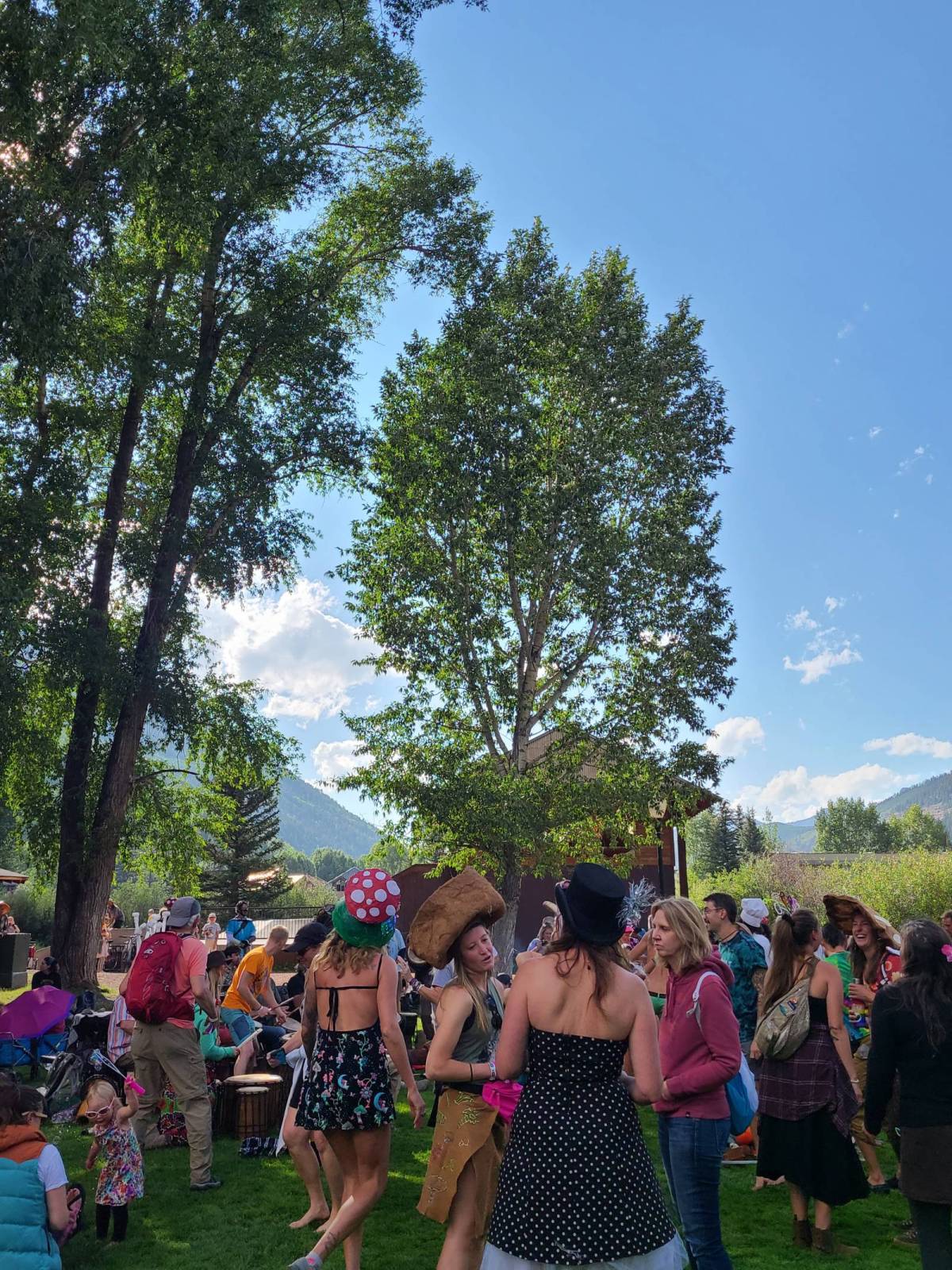
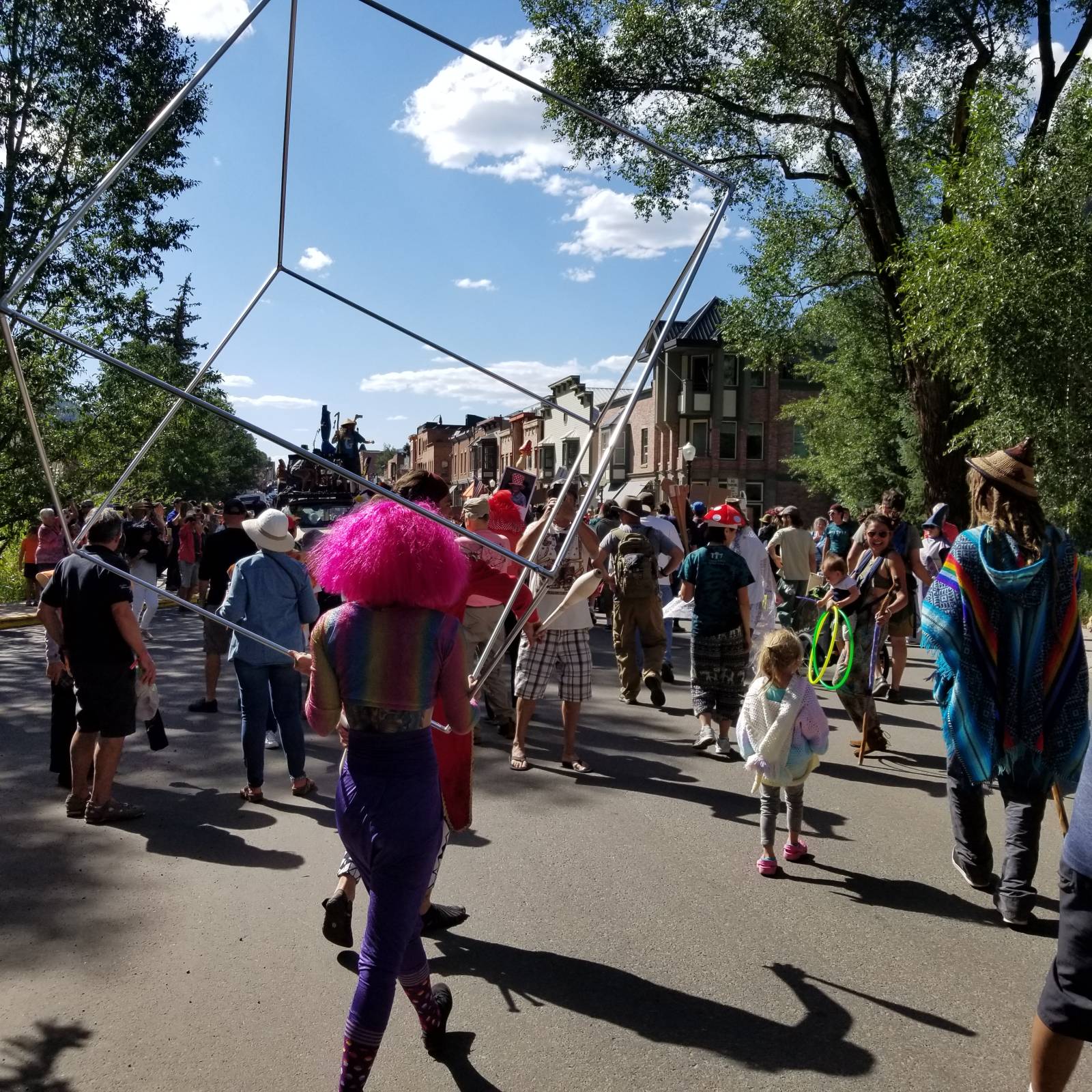
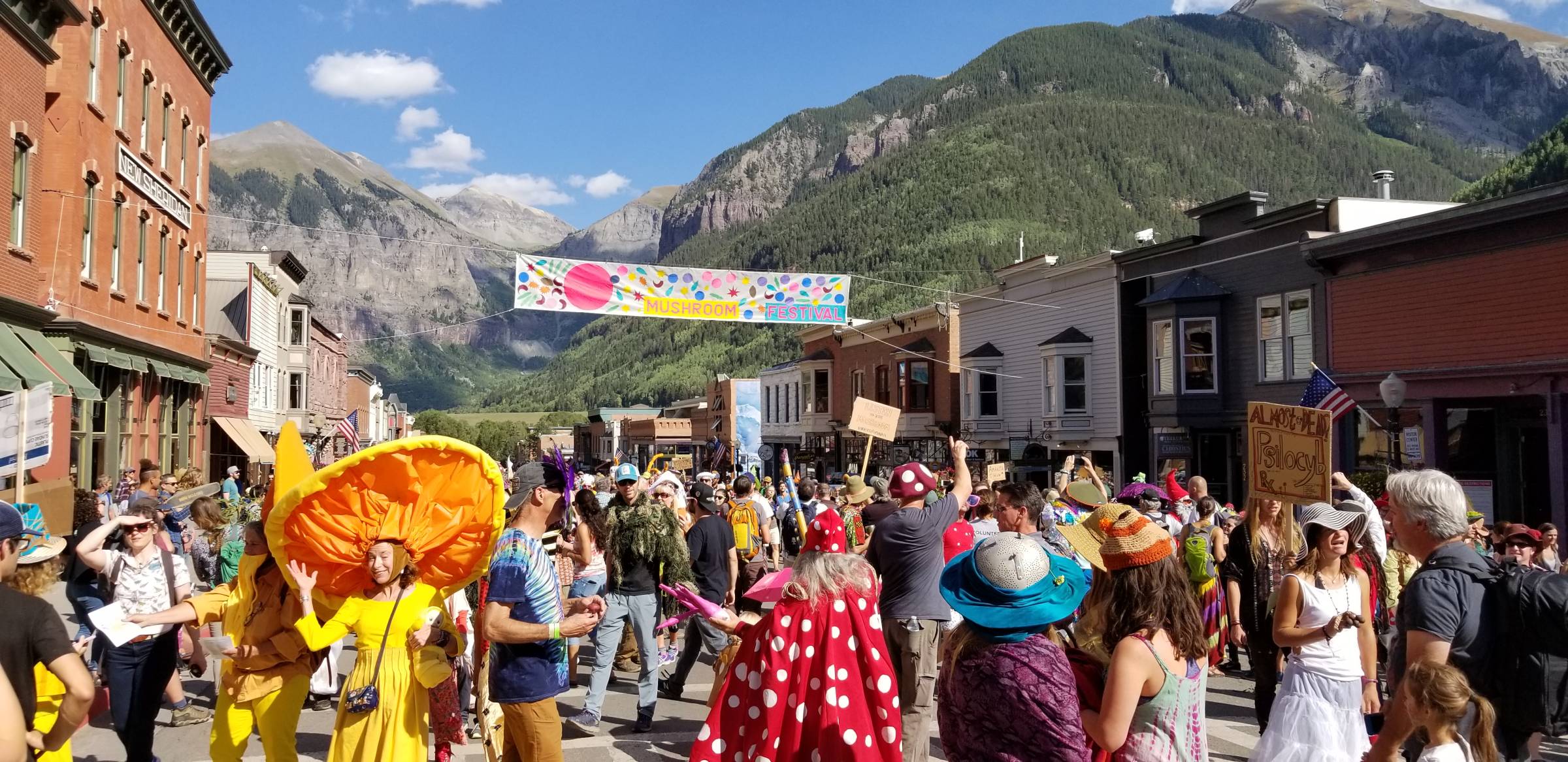
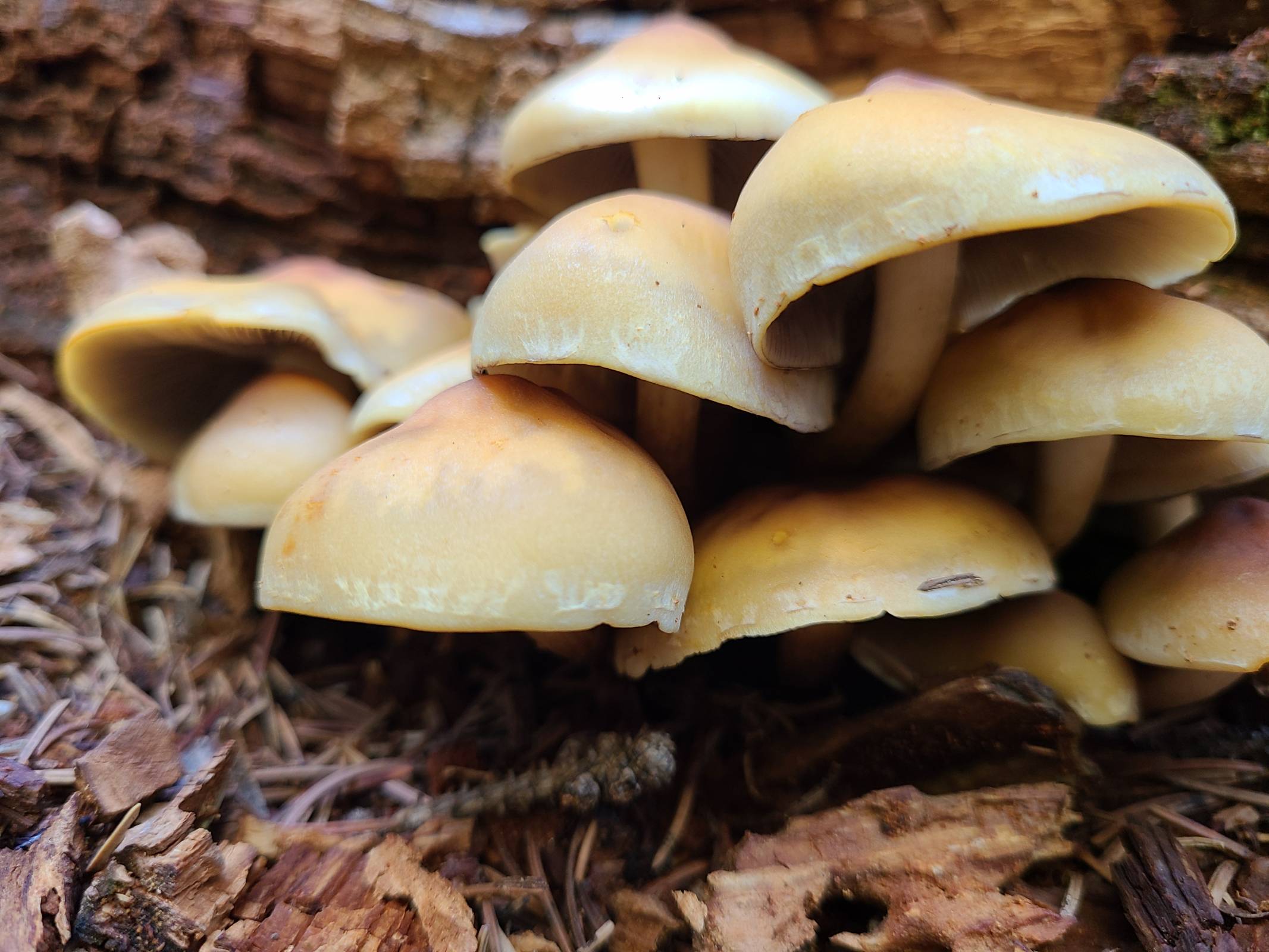
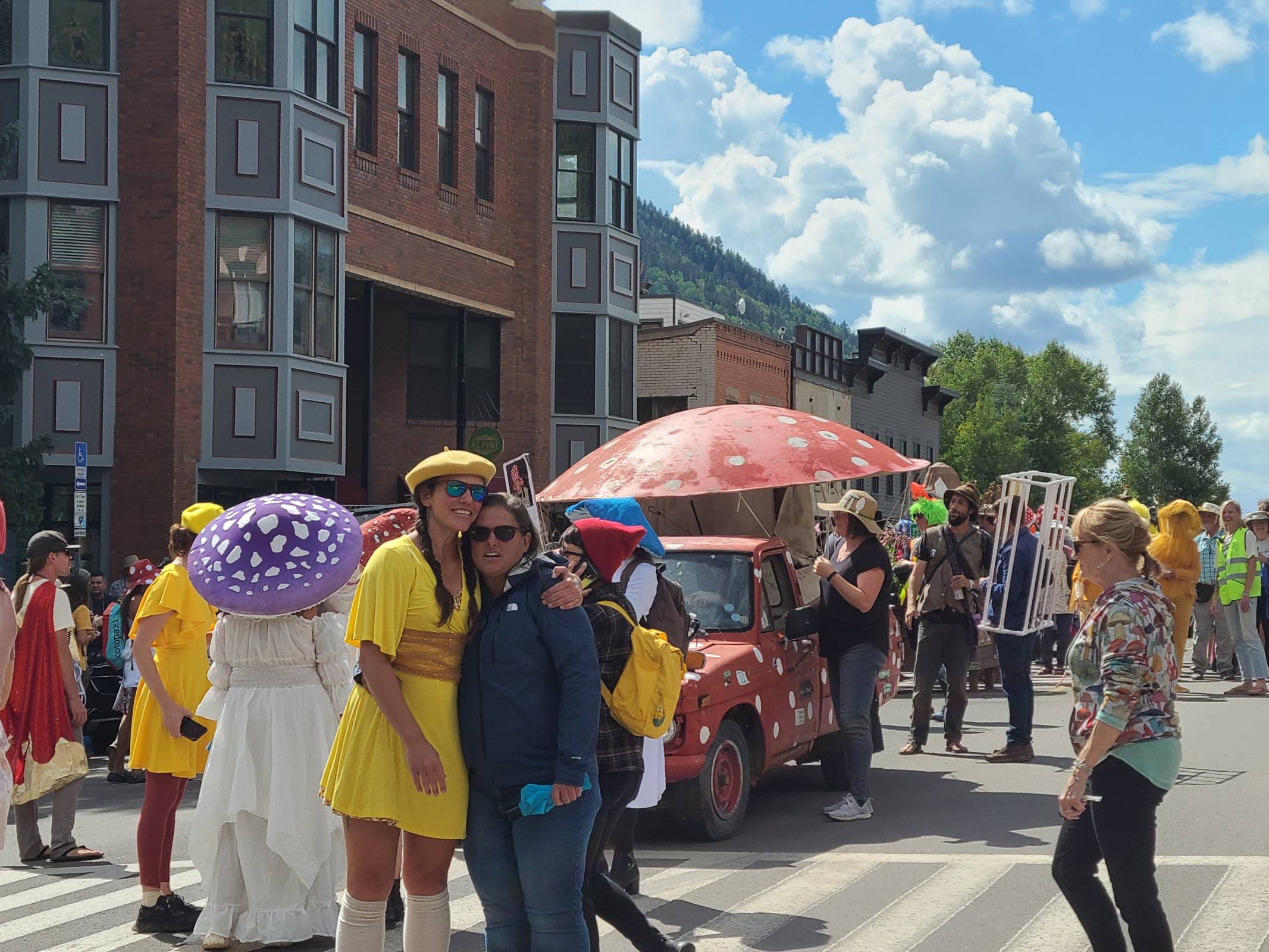
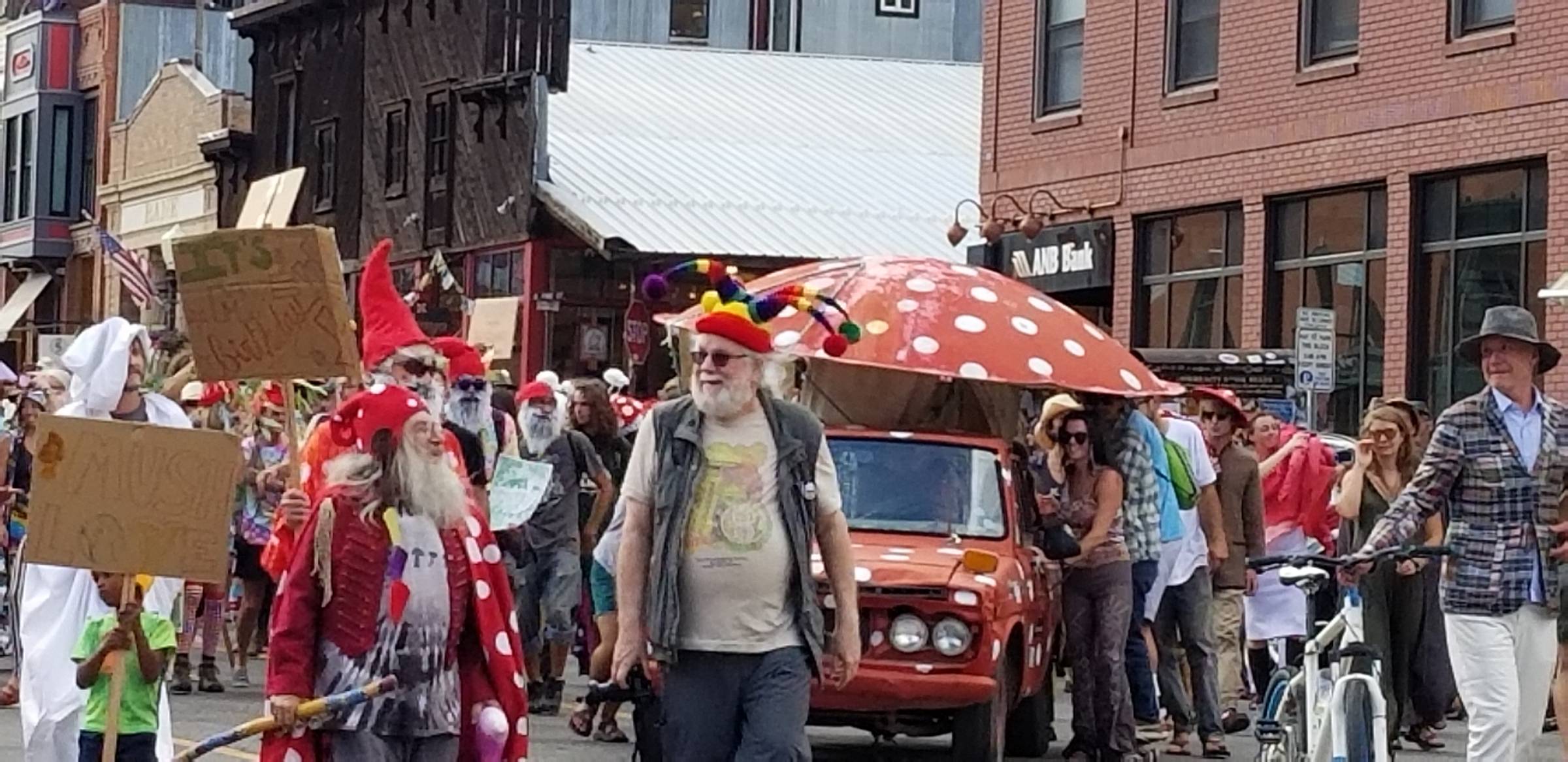
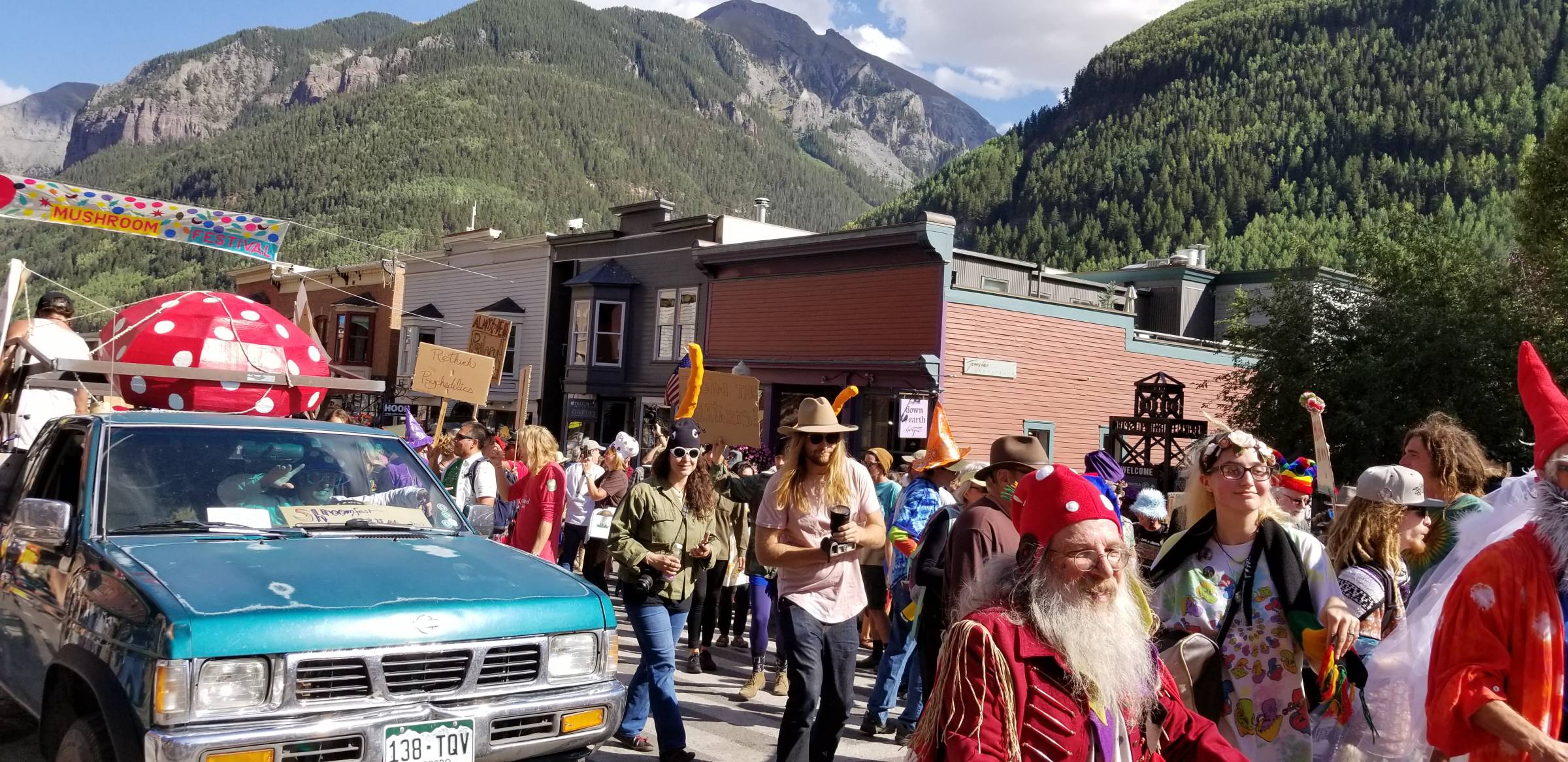
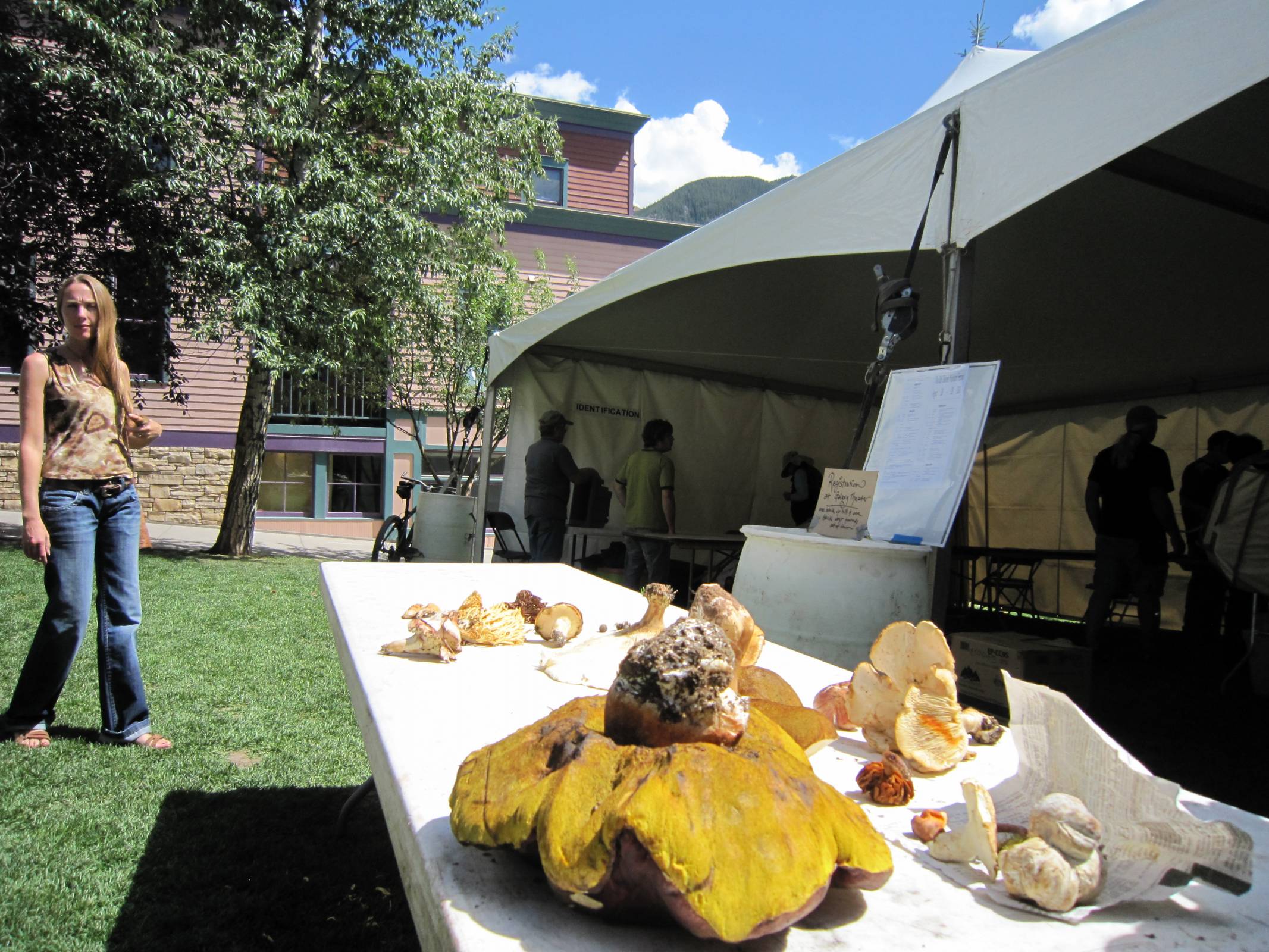
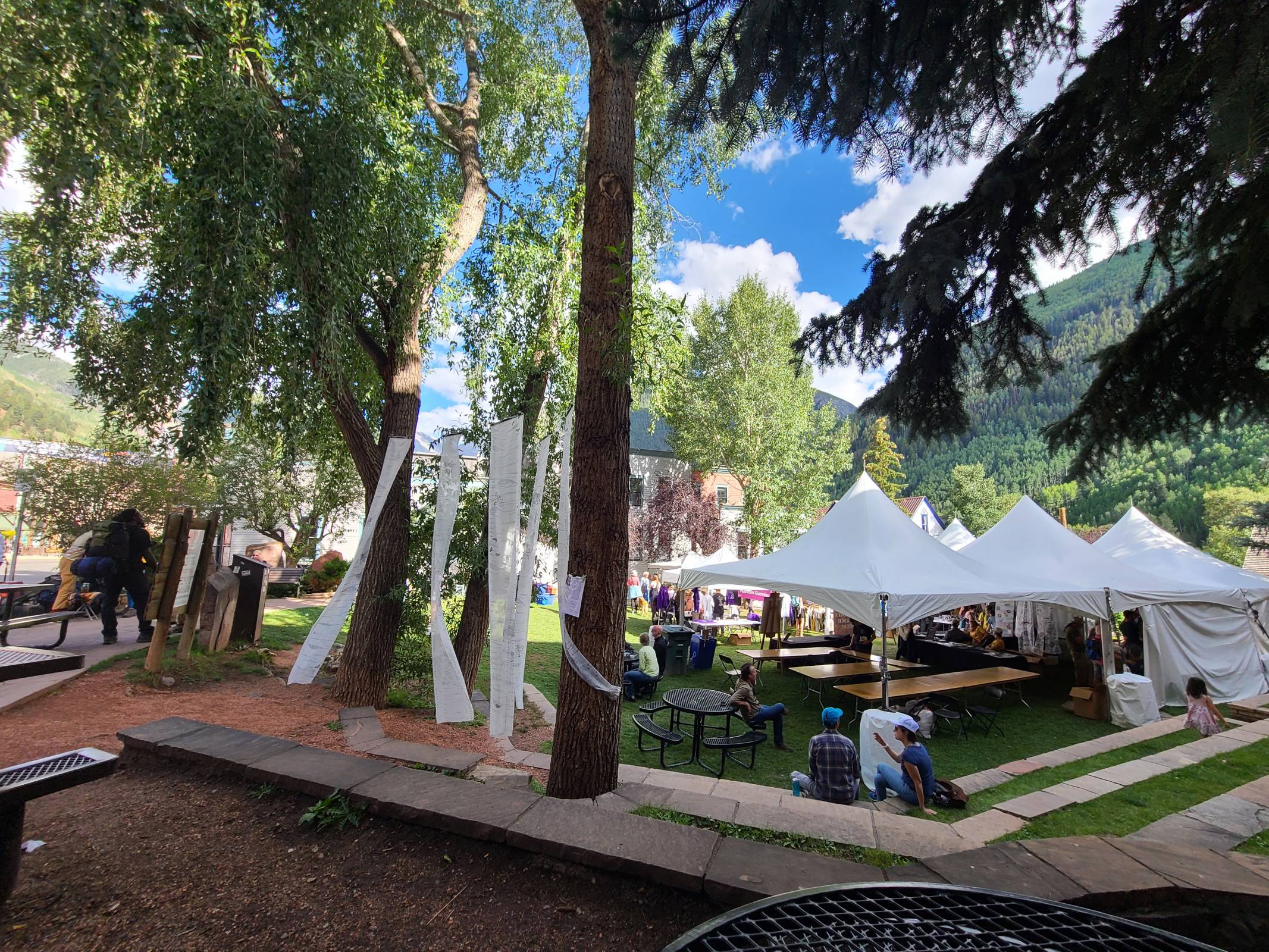
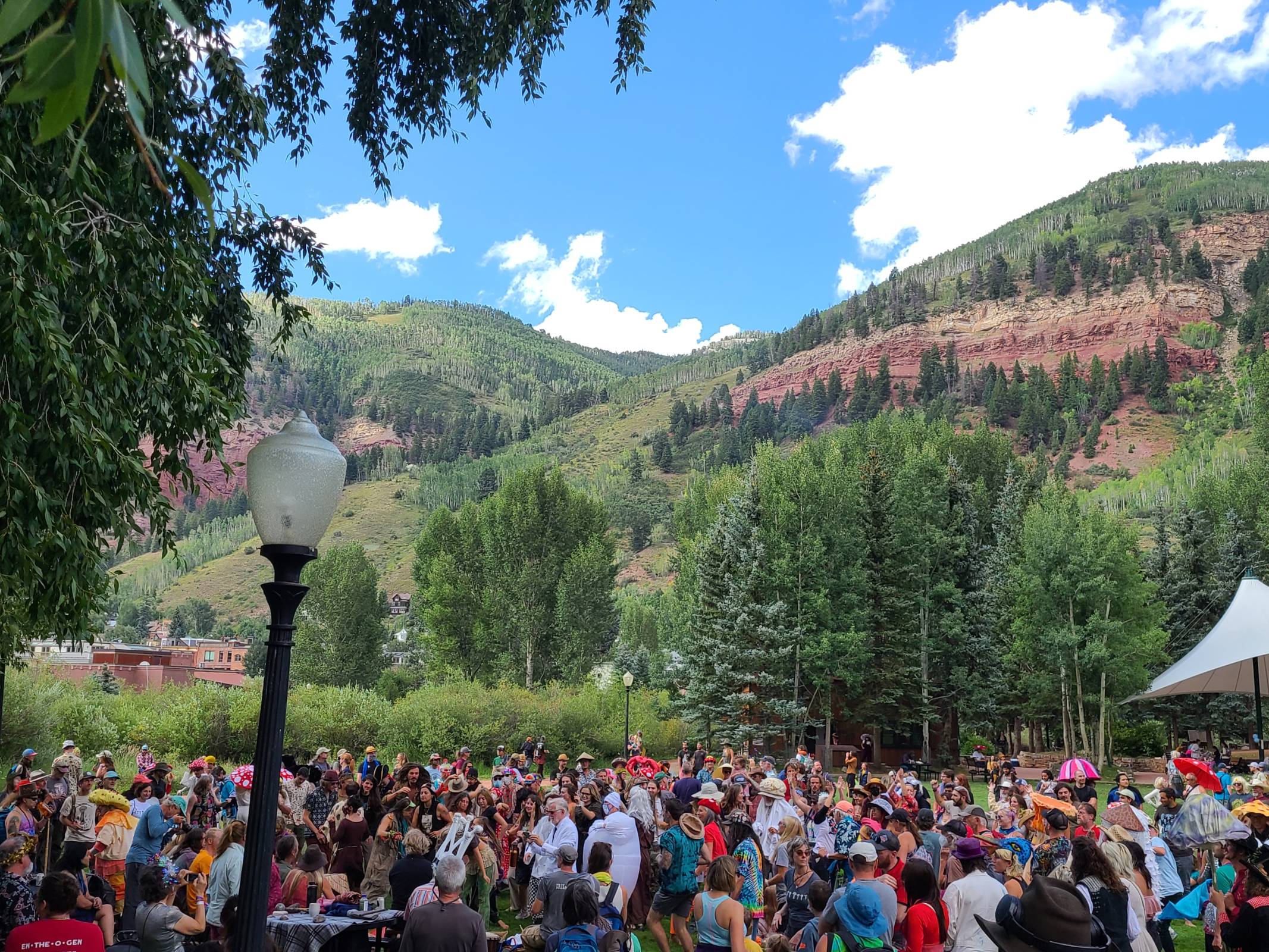
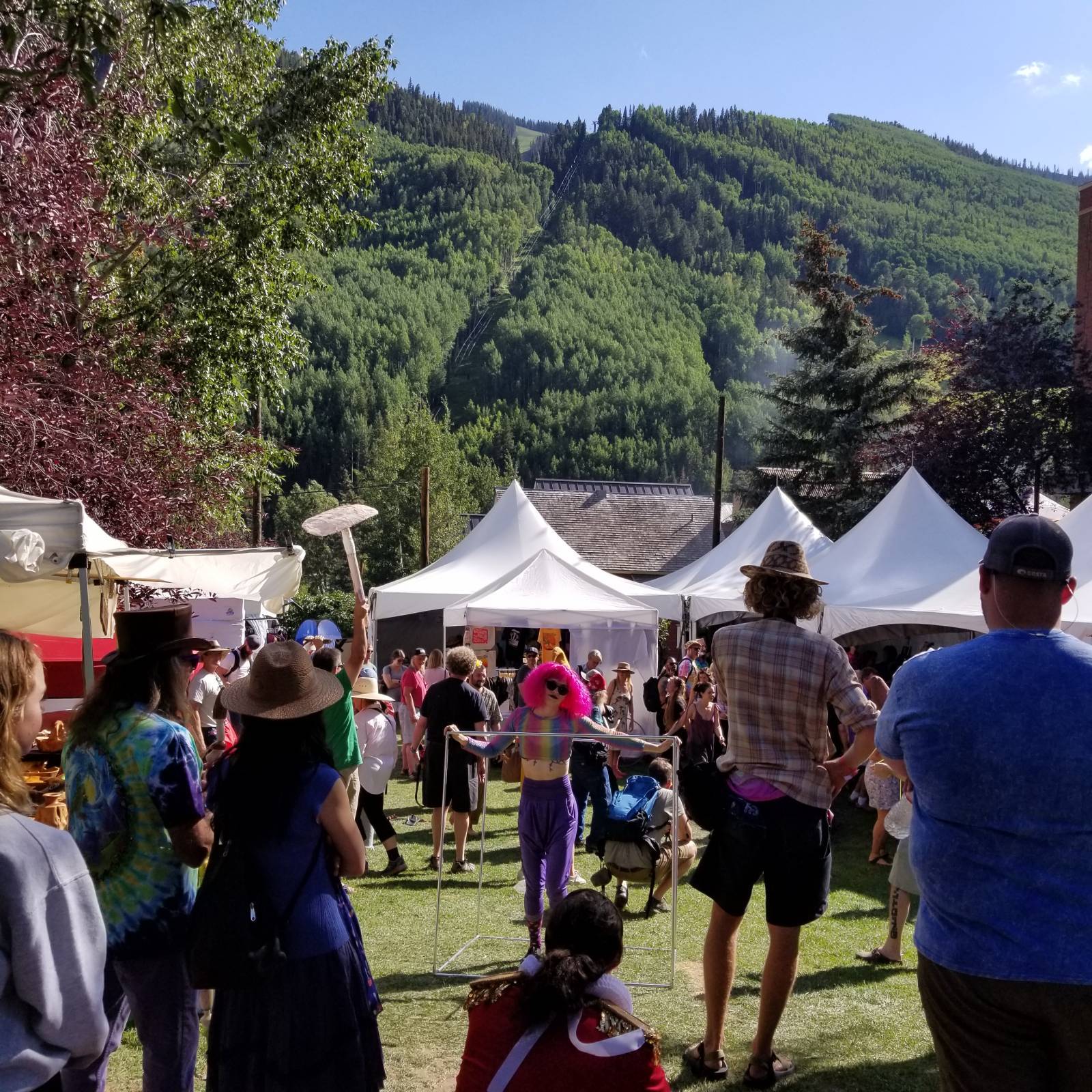
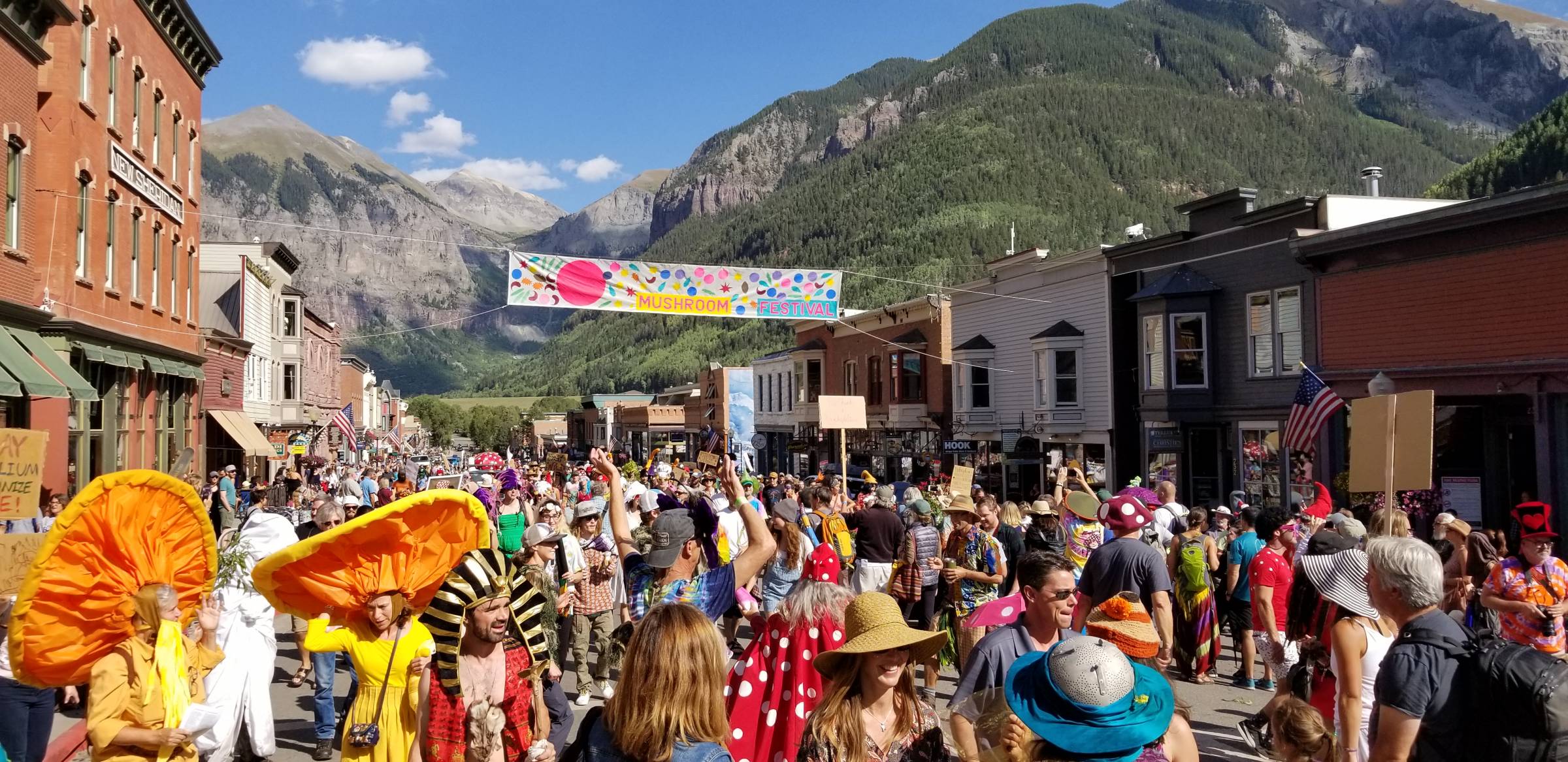
The Telluride Mushroom Festival has brought mycologists, foragers, artists, mushroom enthusiasts and the fungi-curious to Telluride each August since 1981. This gallery documents the festival across multiple years, from mushroom identification displays and activities in Elks Park to wild mushrooms, colorful costumes, the annual parade down Colorado Avenue and the post-parade gathering in Telluride Town Park.
The 2026 Telluride Mushroom Festival took place August 12–16, culminating in the annual parade down Colorado Avenue. See video and photos from the 2026 Telluride Mushroom Festival Parade.
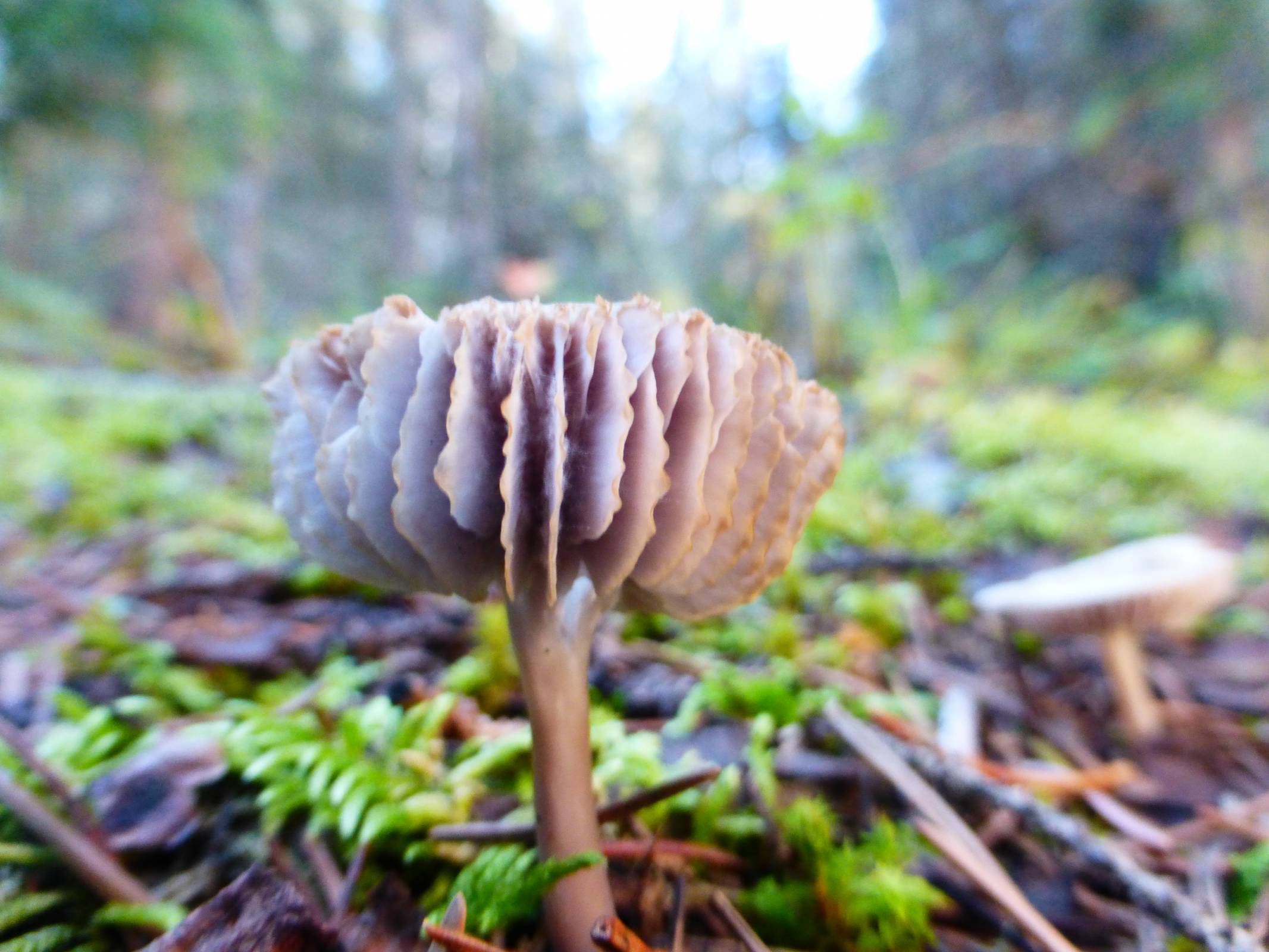
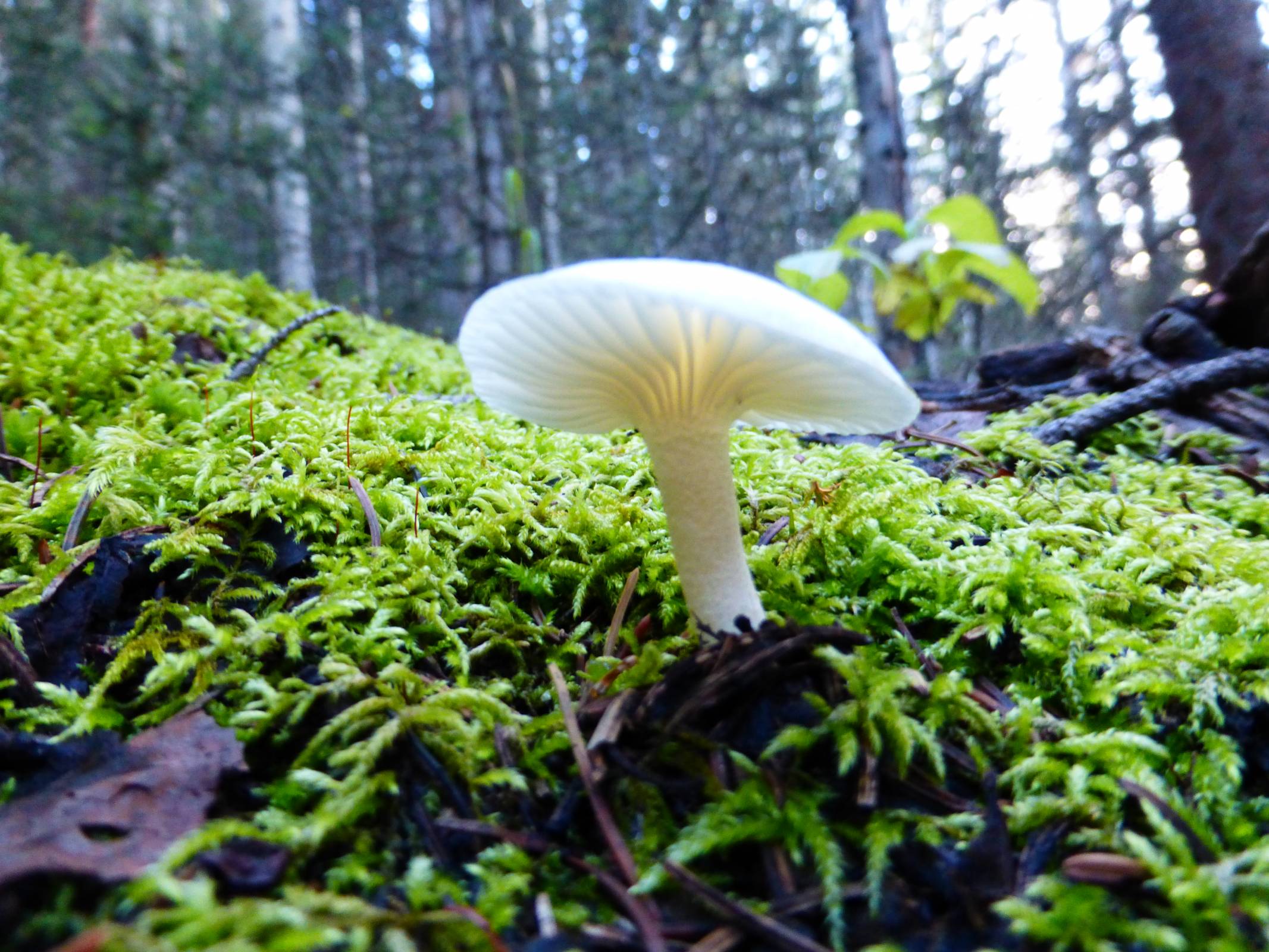
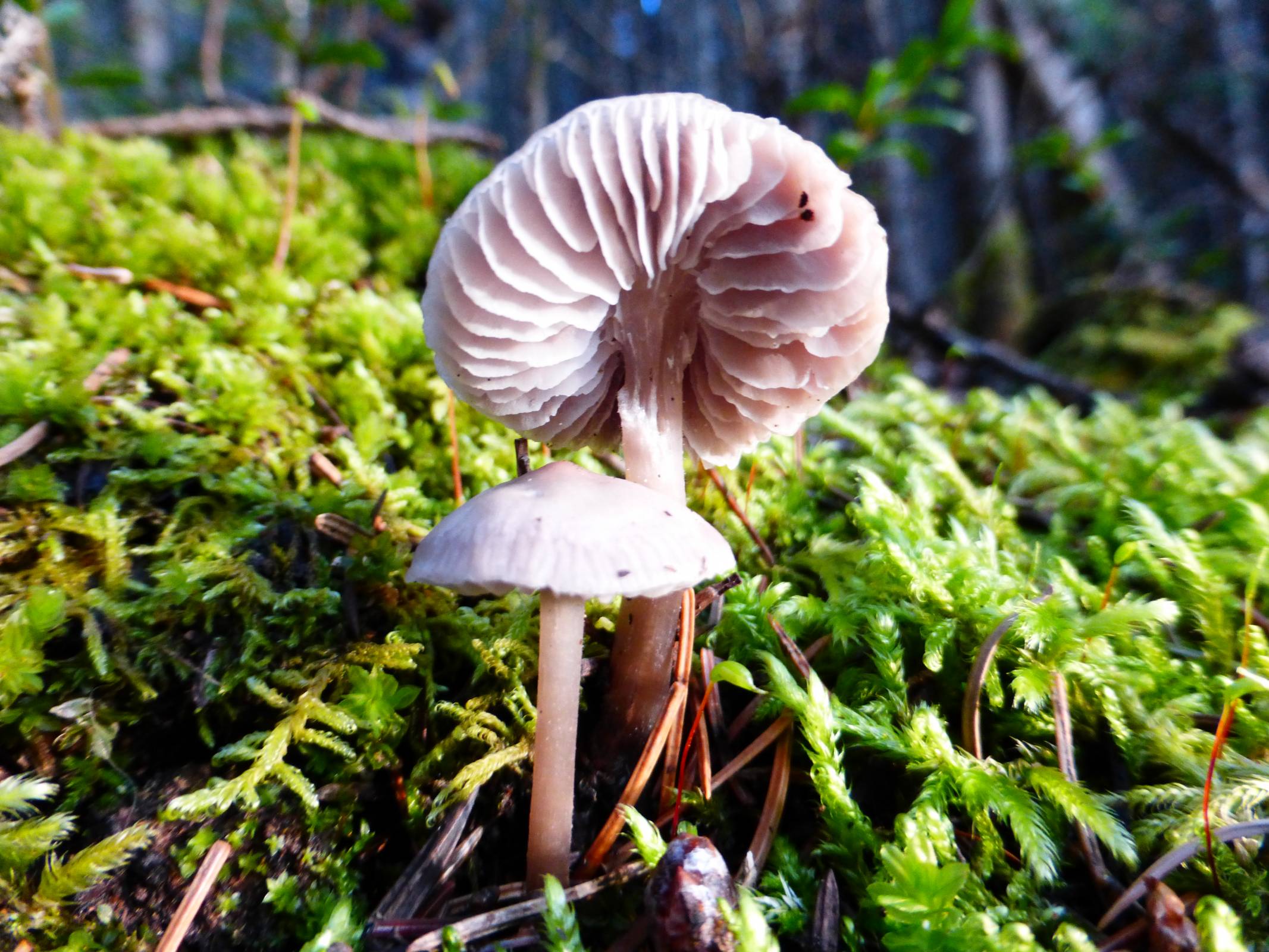
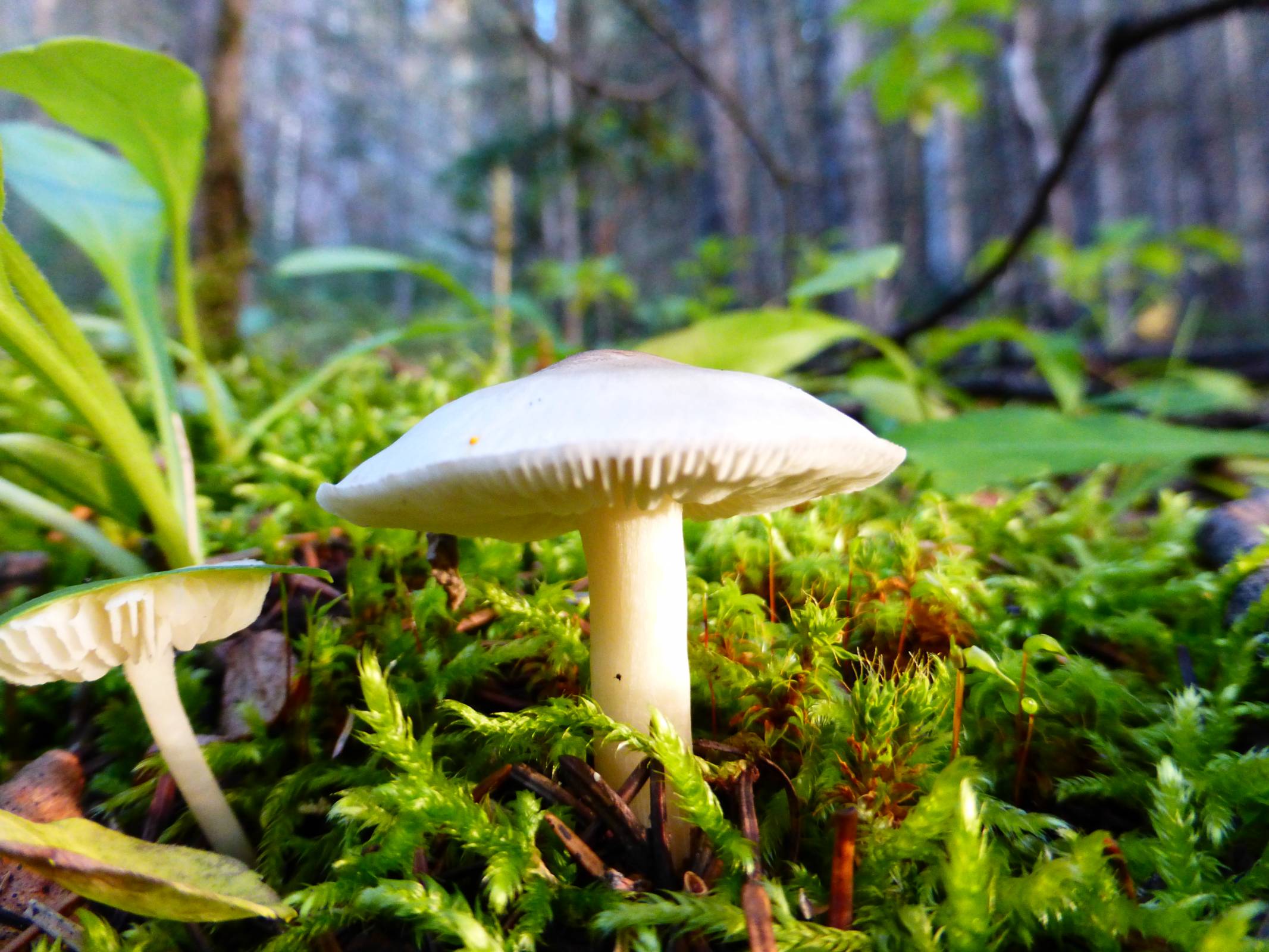
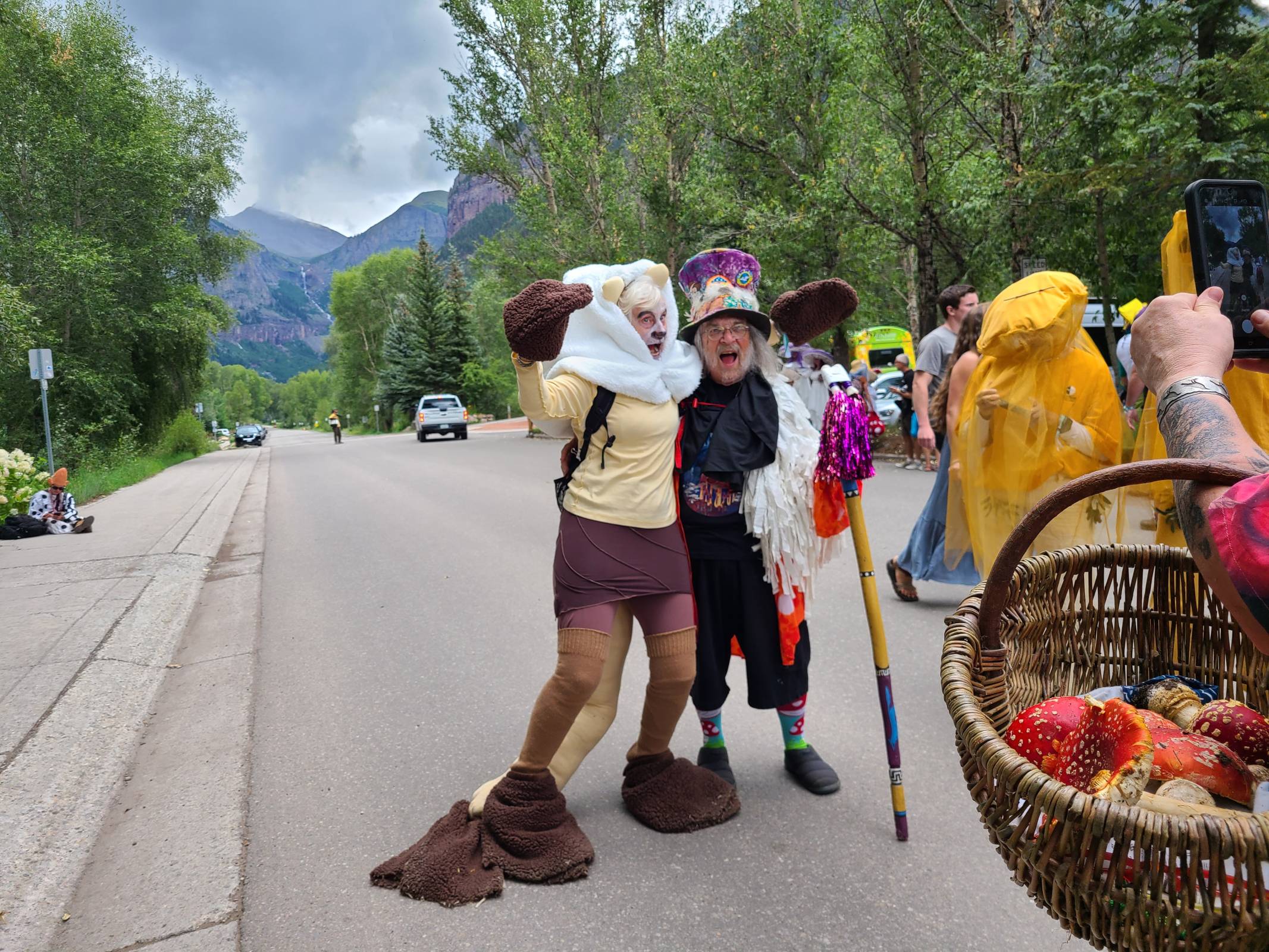
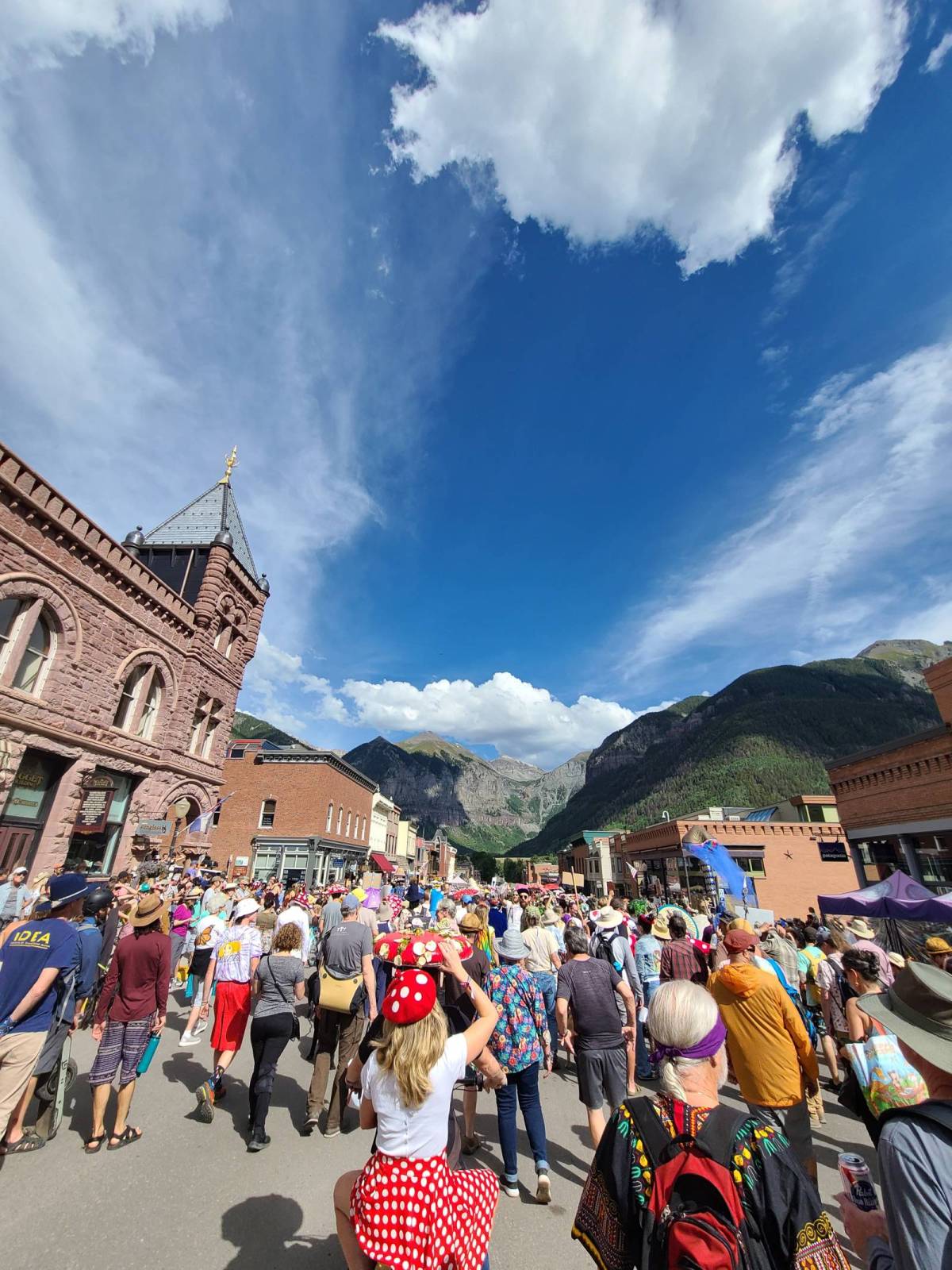
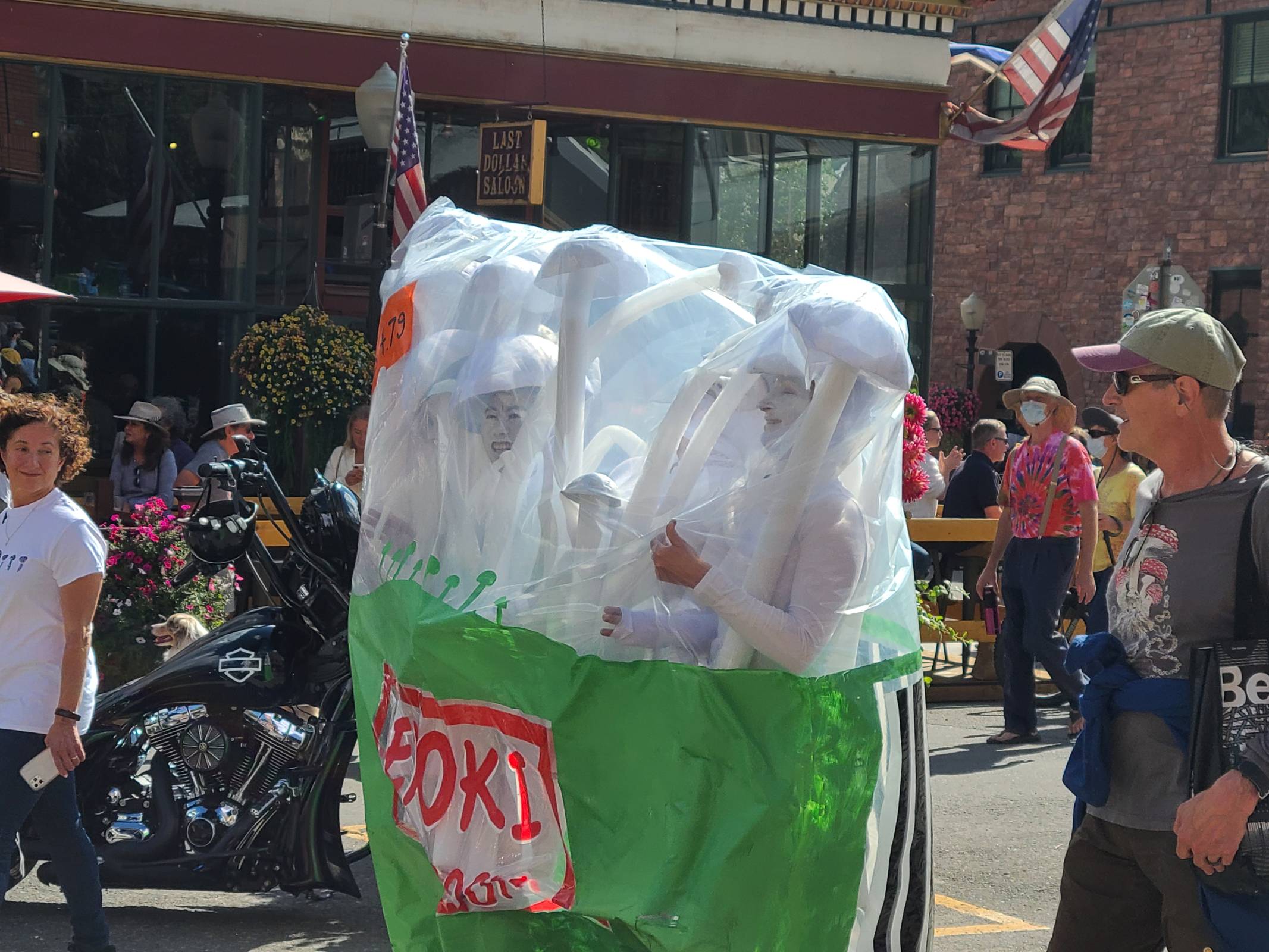
Telluride Mushroom Festival Events
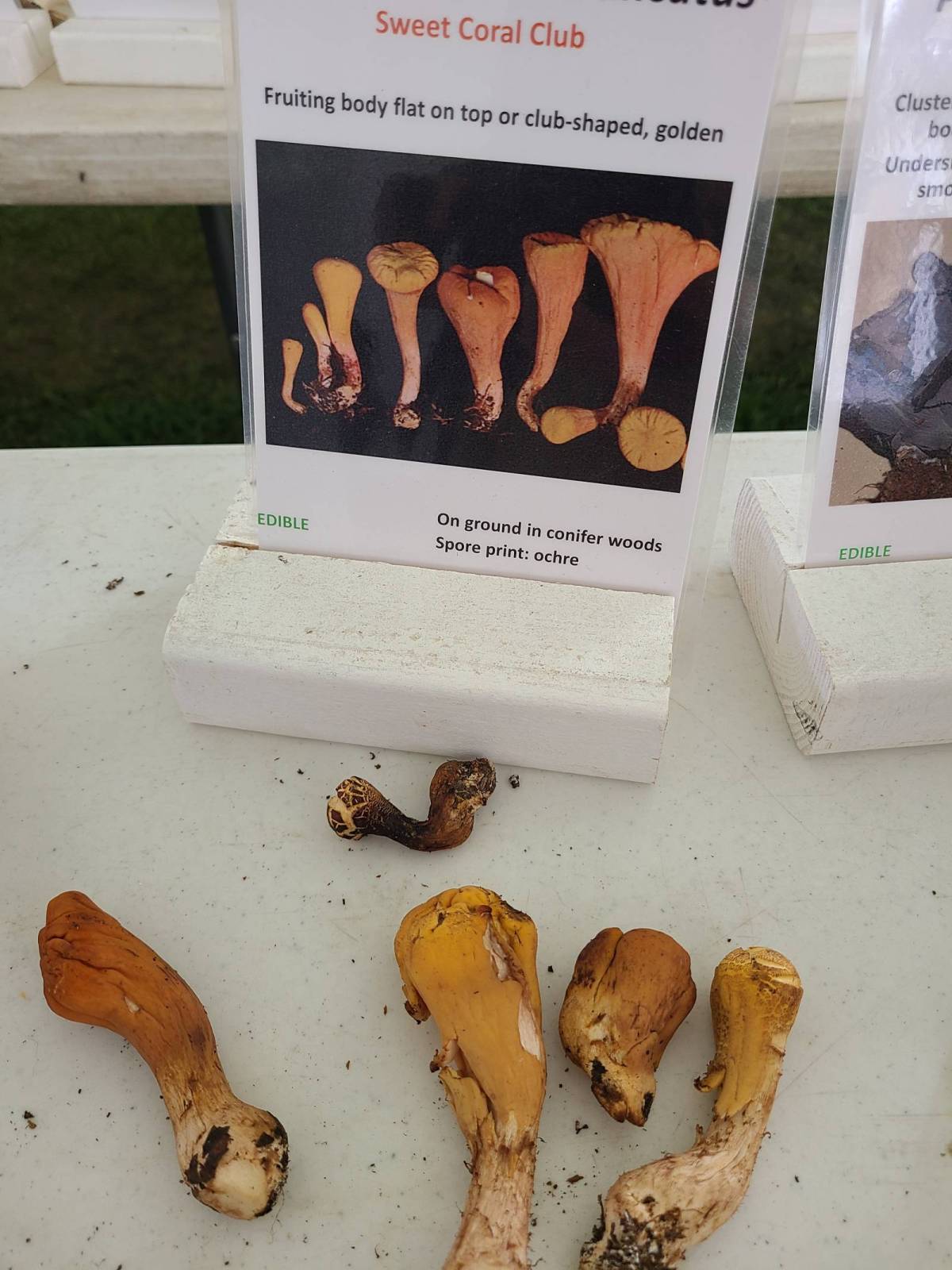
The festival combines mushroom science, foraging, food, art and celebration. Programs typically include talks by mycologists and other researchers, guided mushroom forays in the surrounding mountains, identification sessions, cultivation and culinary workshops, and discussions of medicinal and psychedelic fungi.
The festival’s more public events include the annual Mushroom Parade through downtown Telluride and the Puff Ball, where mushroom costumes and the festival’s more eccentric side come to the foreground.
For the current festival schedule, registration and other information, visit the official Telluride Mushroom Festival website.
Mushrooms of the Telluride Region
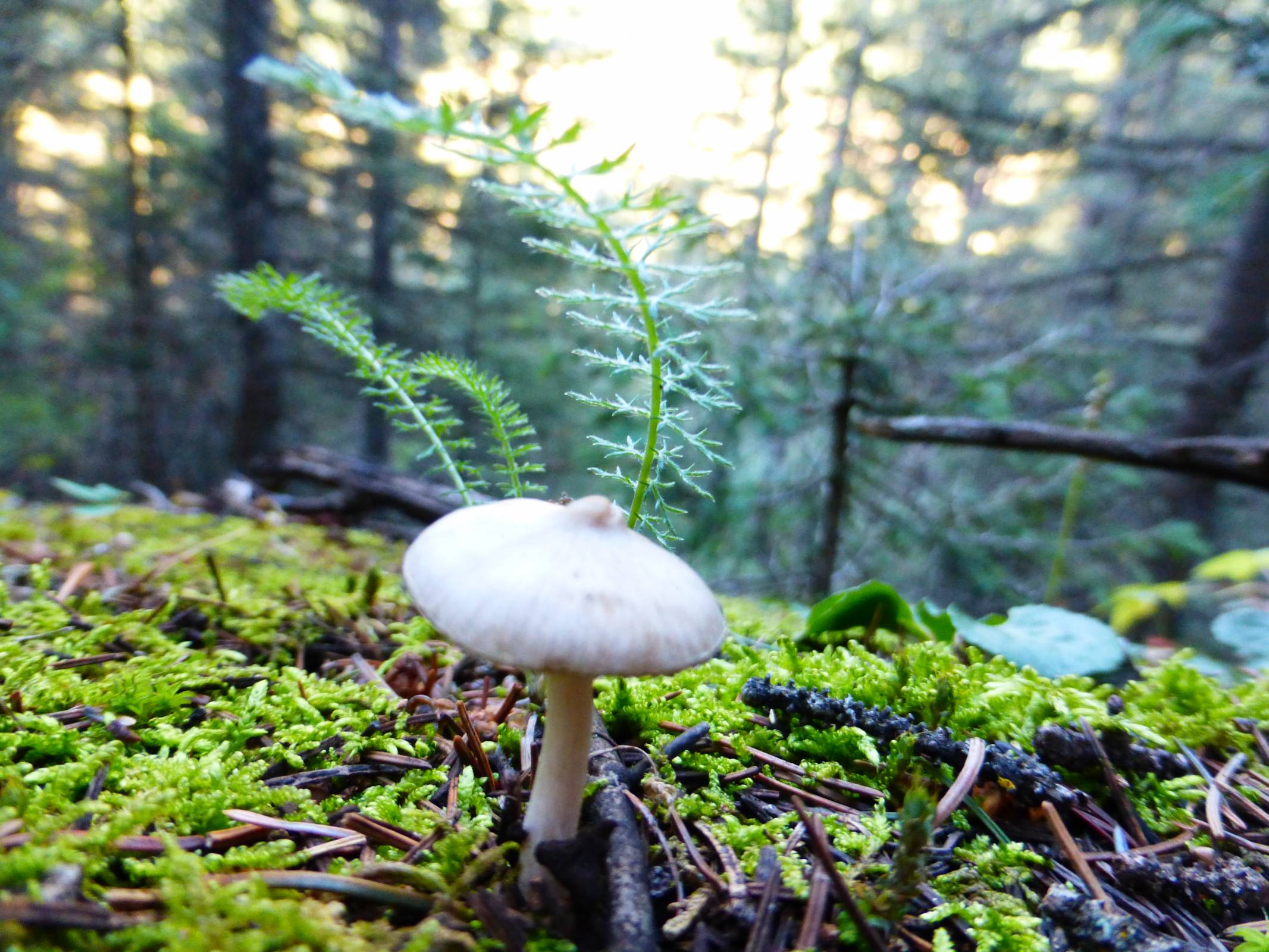
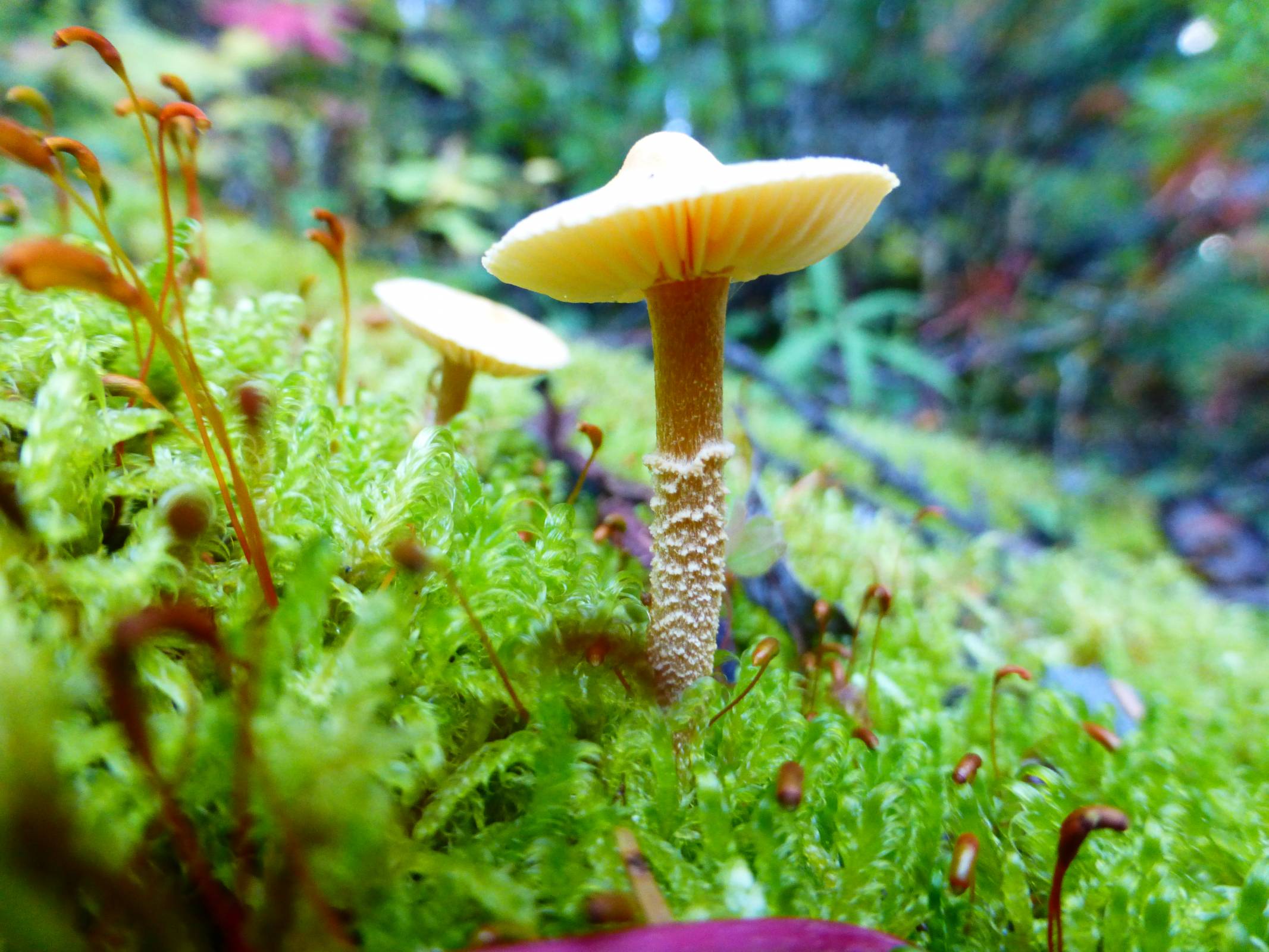
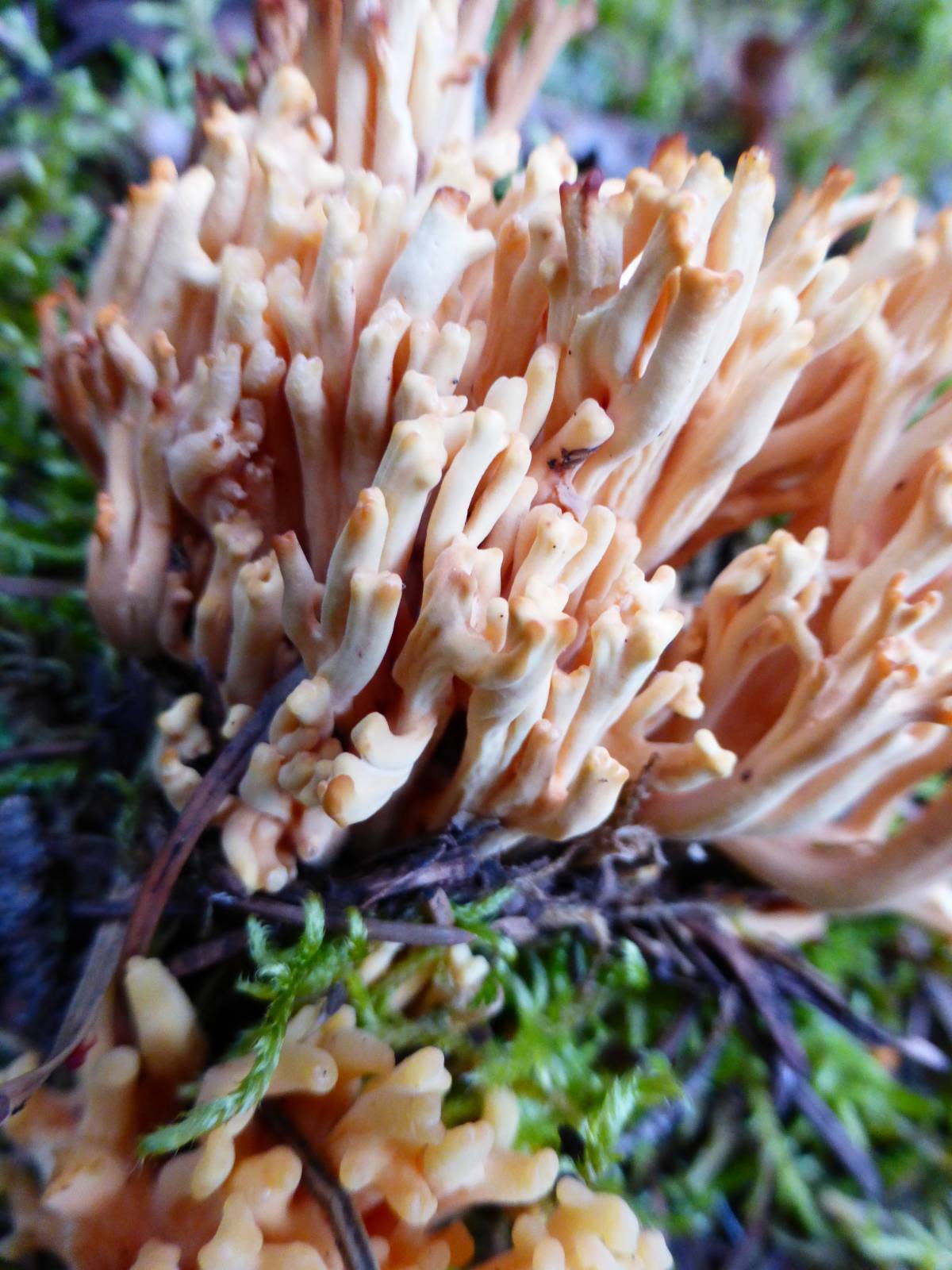
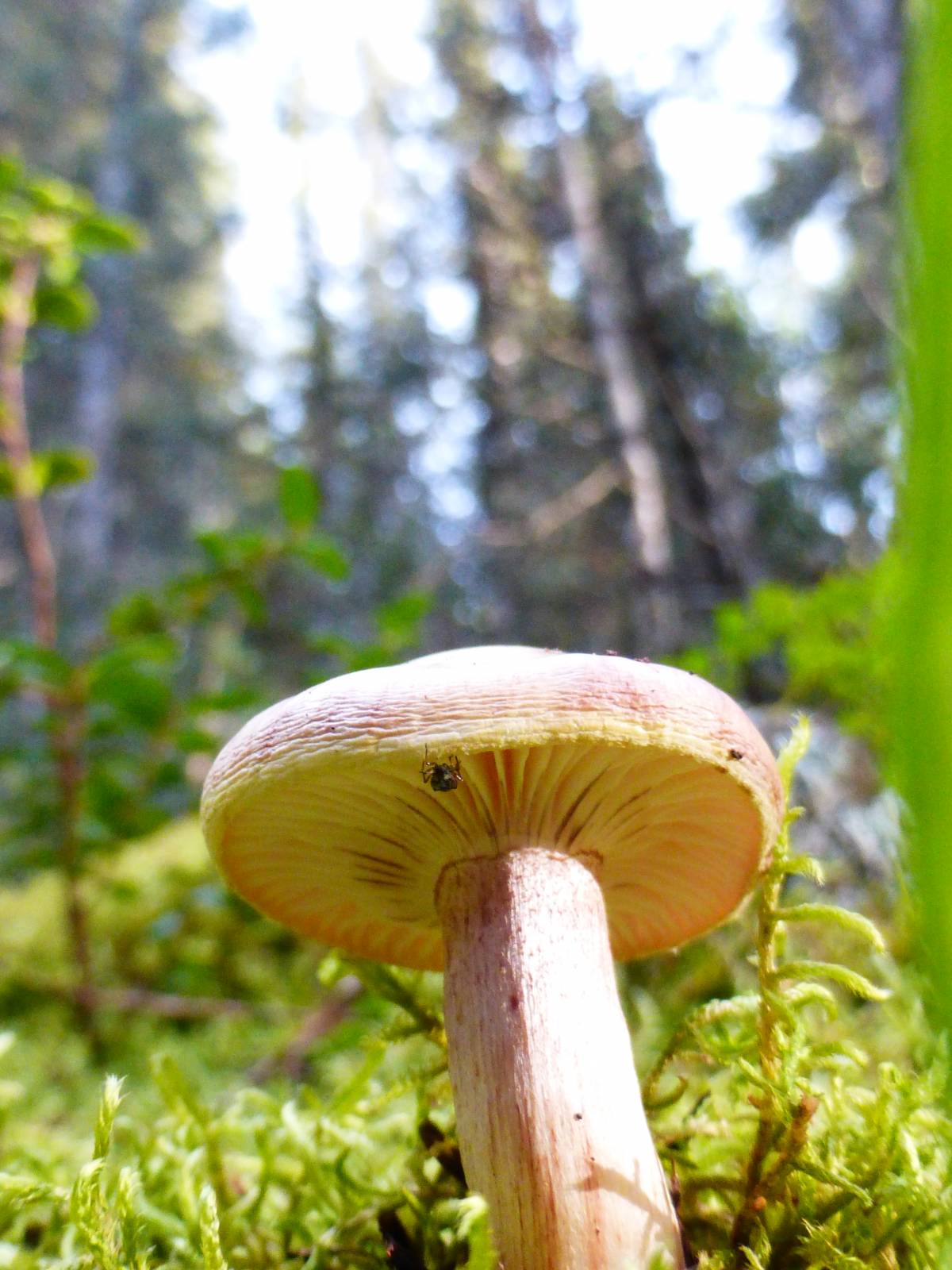
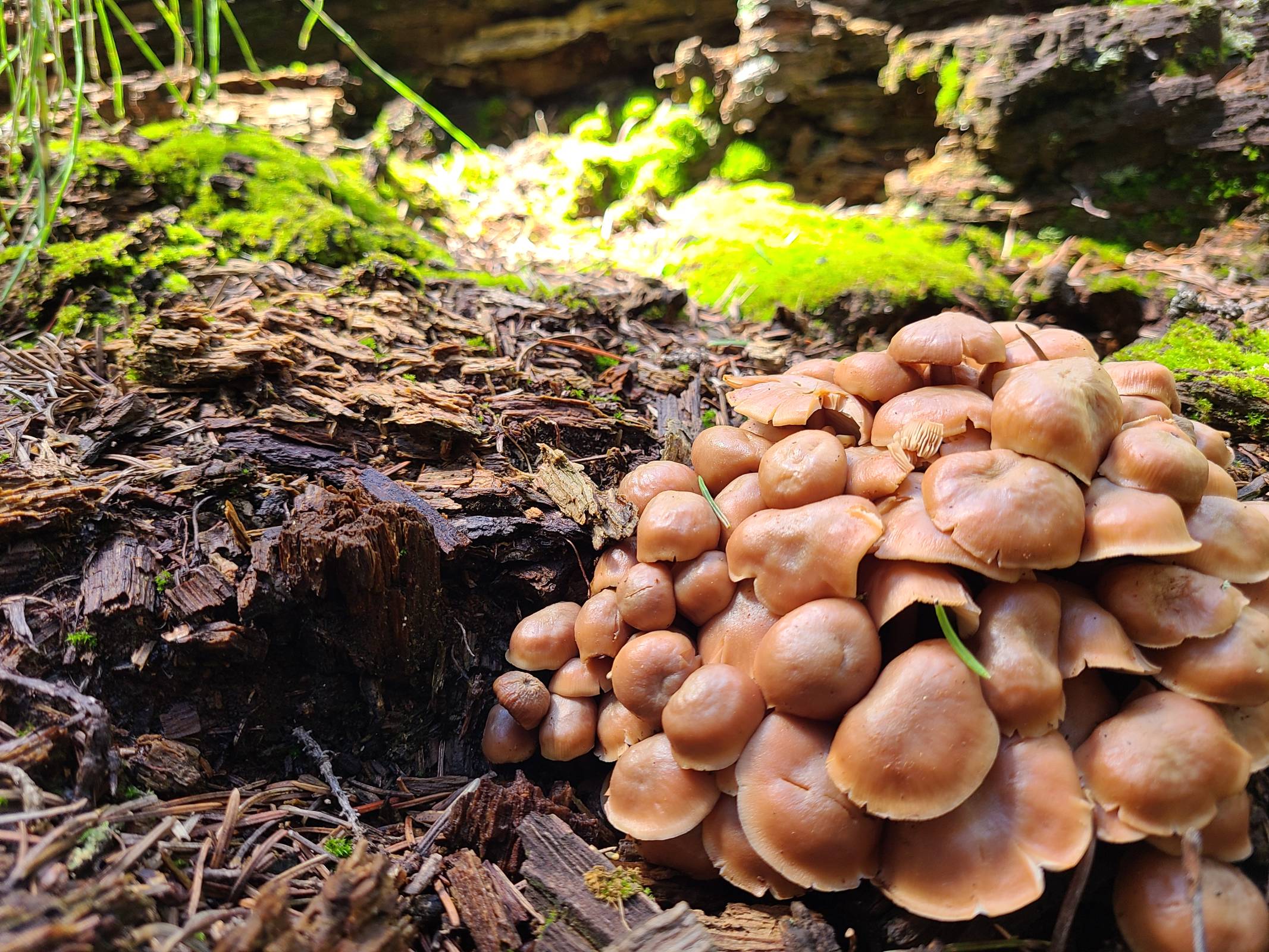
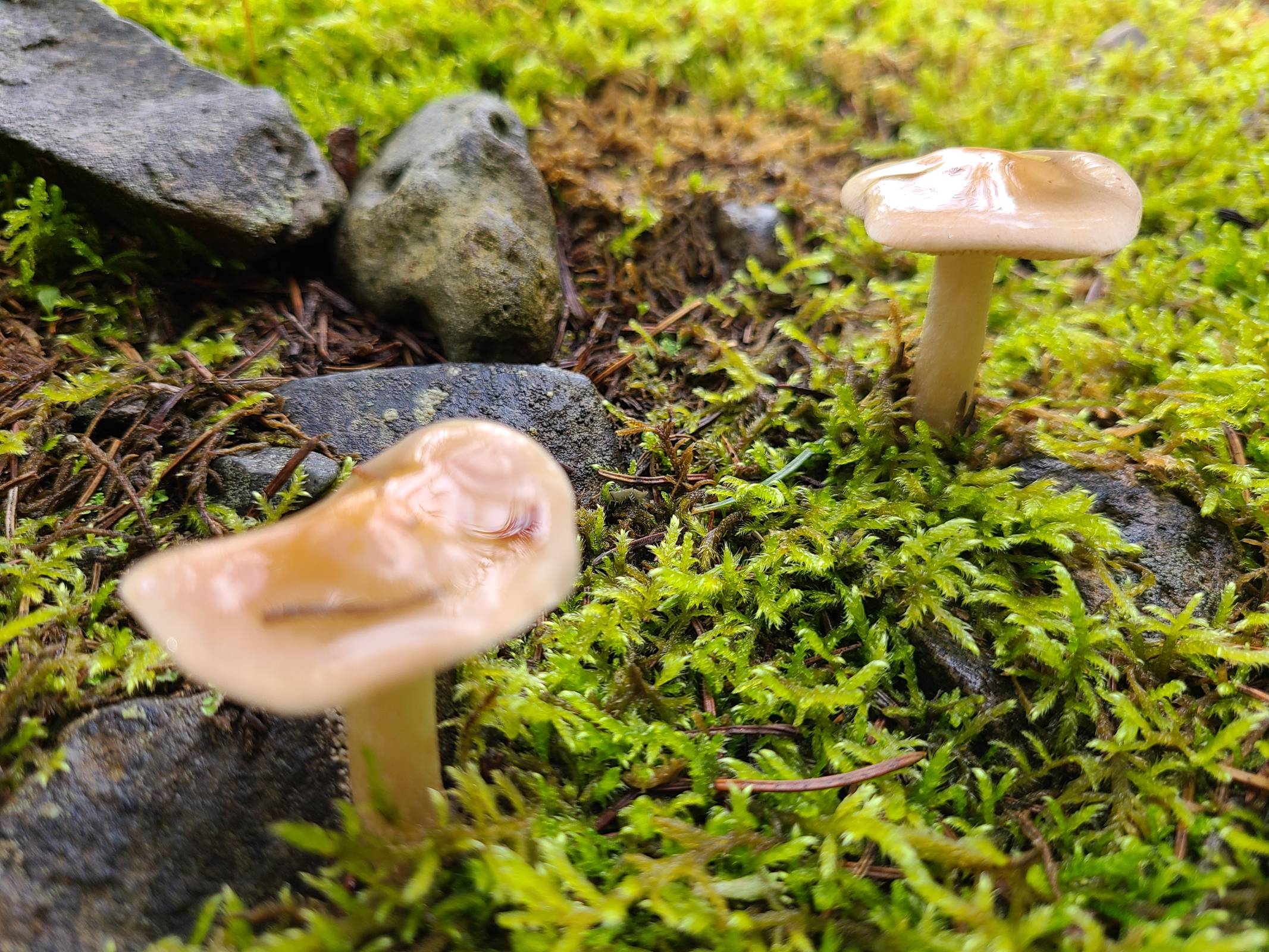
The forests and mountains surrounding Telluride support a wide variety of fungi. Species and genera commonly associated with the southern San Juan Mountains, and represented in local mushroom identification and festival activities, include:
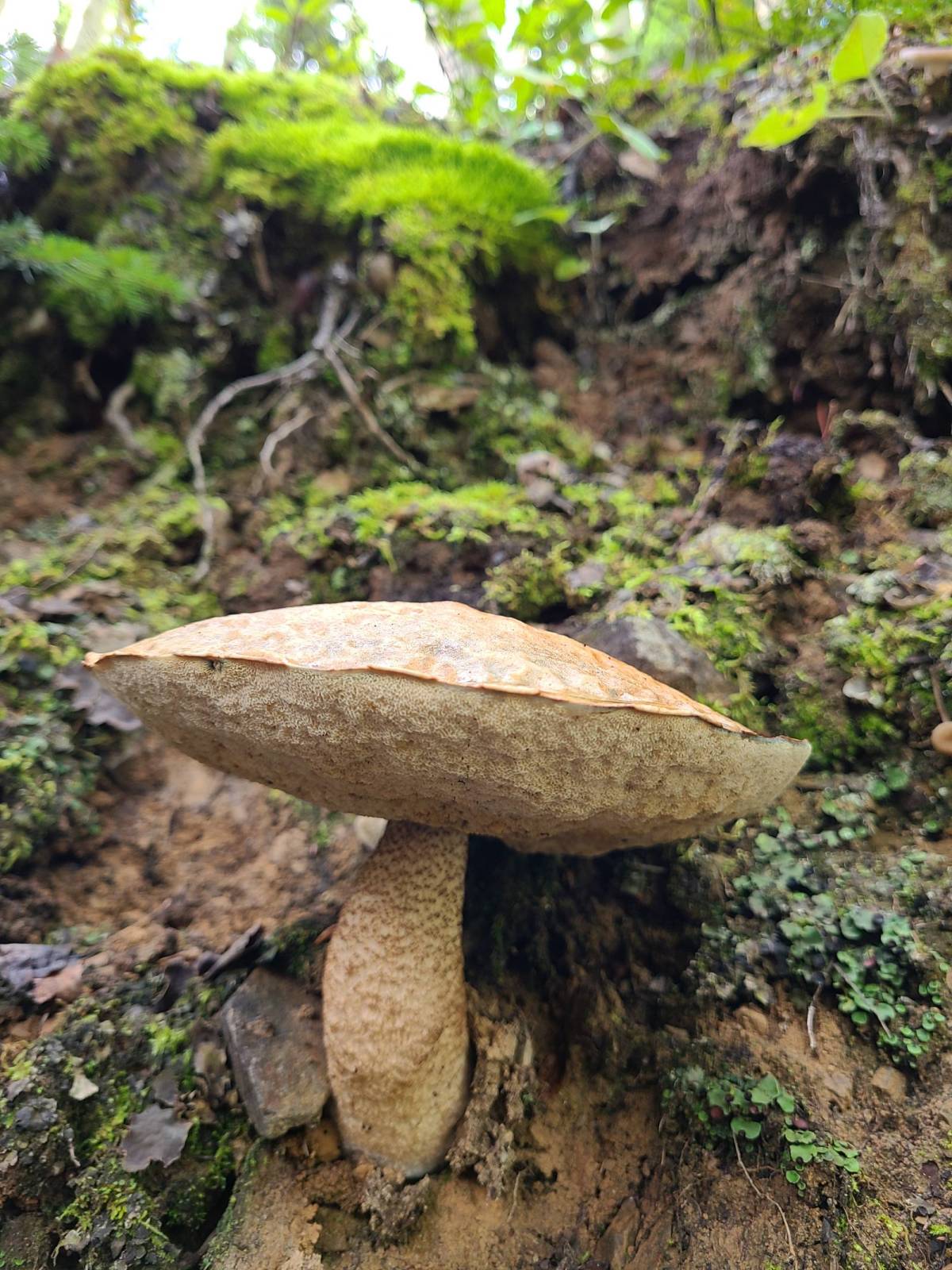
- King bolete (Boletus rubriceps). Also known as Rocky Mountain porcini, this large bolete is common in Colorado’s high-elevation conifer forests, particularly with spruce.
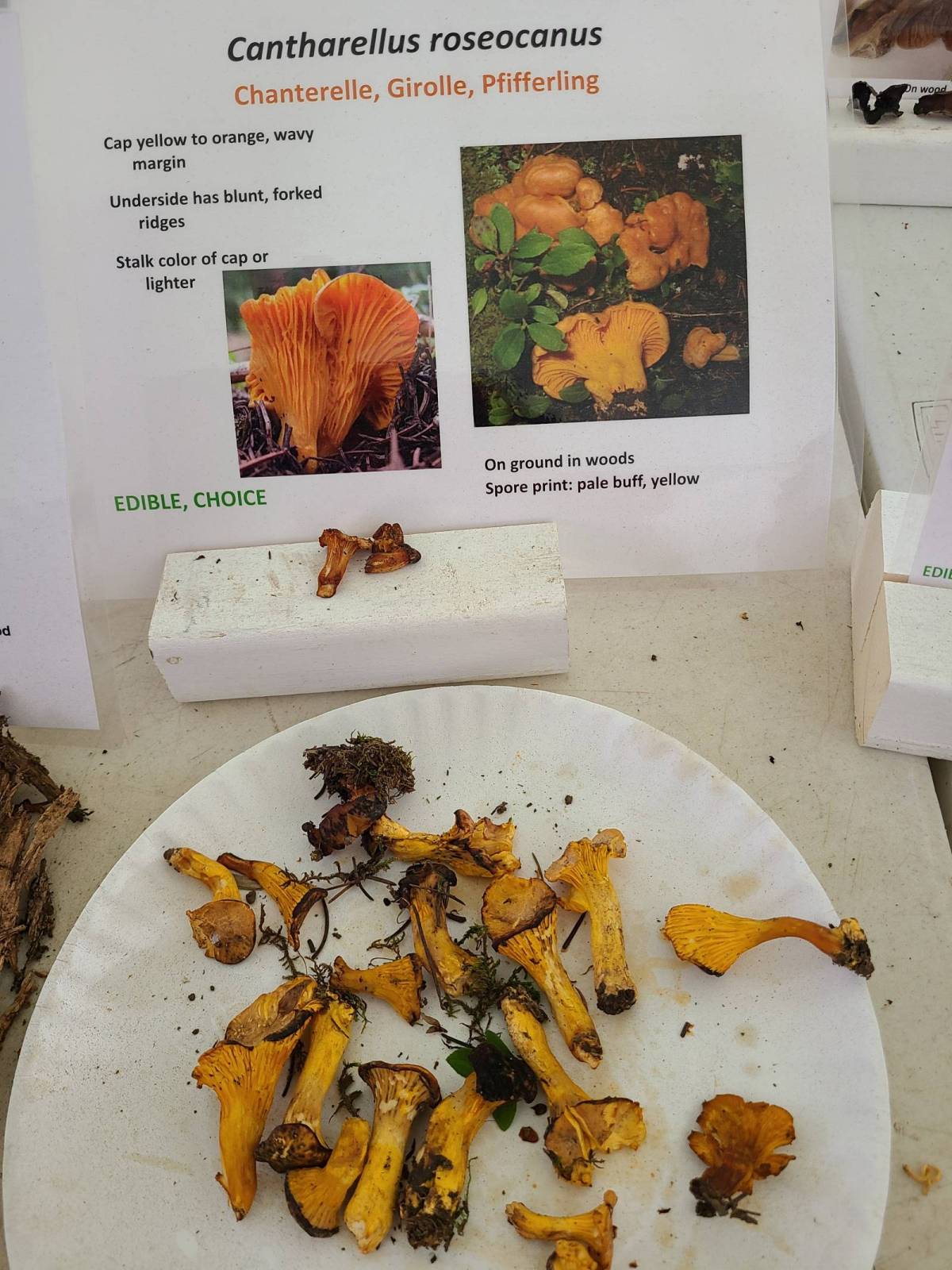
- Rainbow chanterelle (Cantharellus roseocanus). The golden chanterelle of the Rocky Mountains, this sought-after edible mushroom can be abundant in the moist, high-elevation forests of the San Juan Mountains.
- Black morels (Morchella spp.). Several species of black morels occur in Colorado’s mountains, including species associated with conifer and aspen forests and others that fruit prolifically following wildfire.
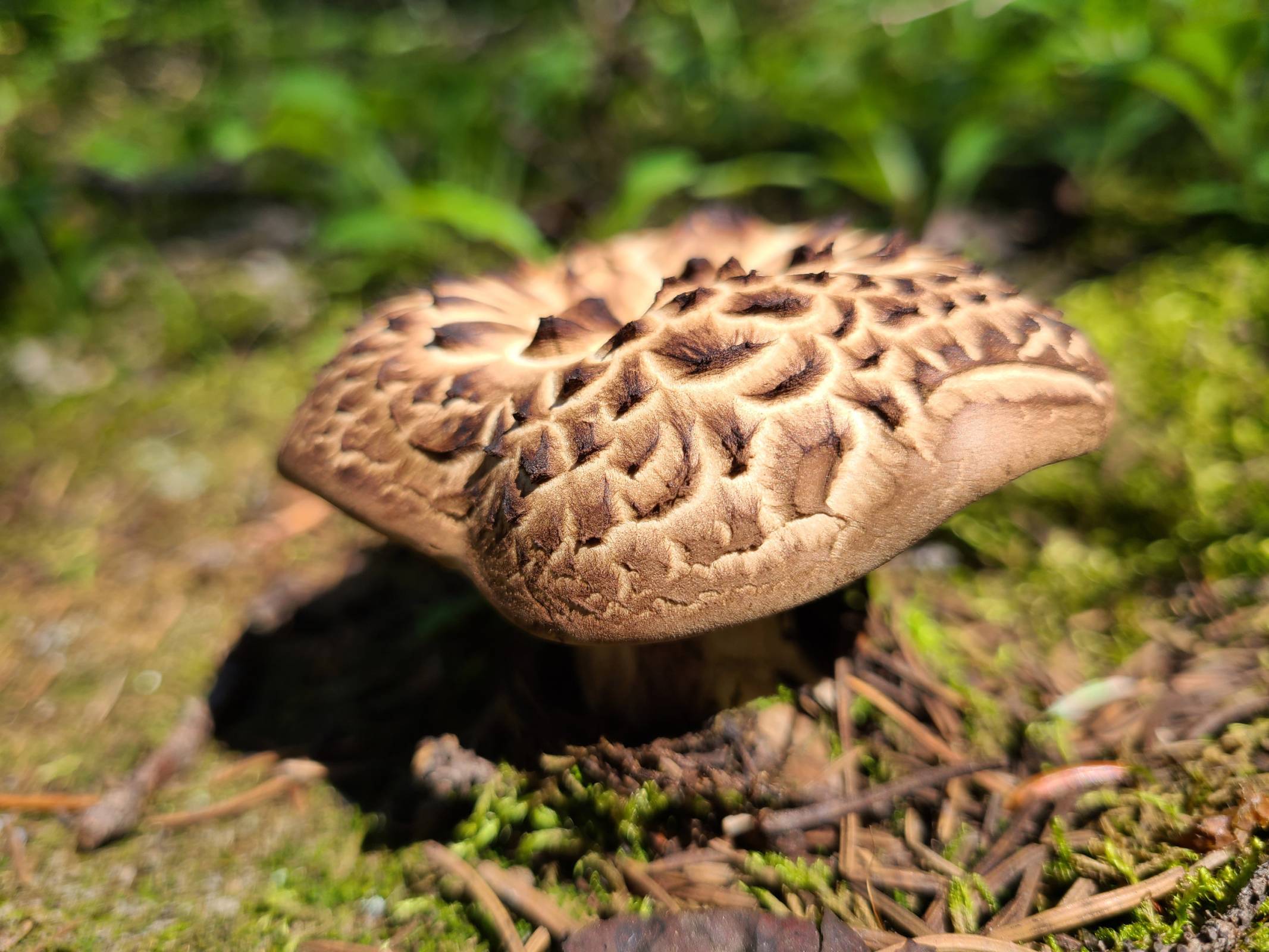
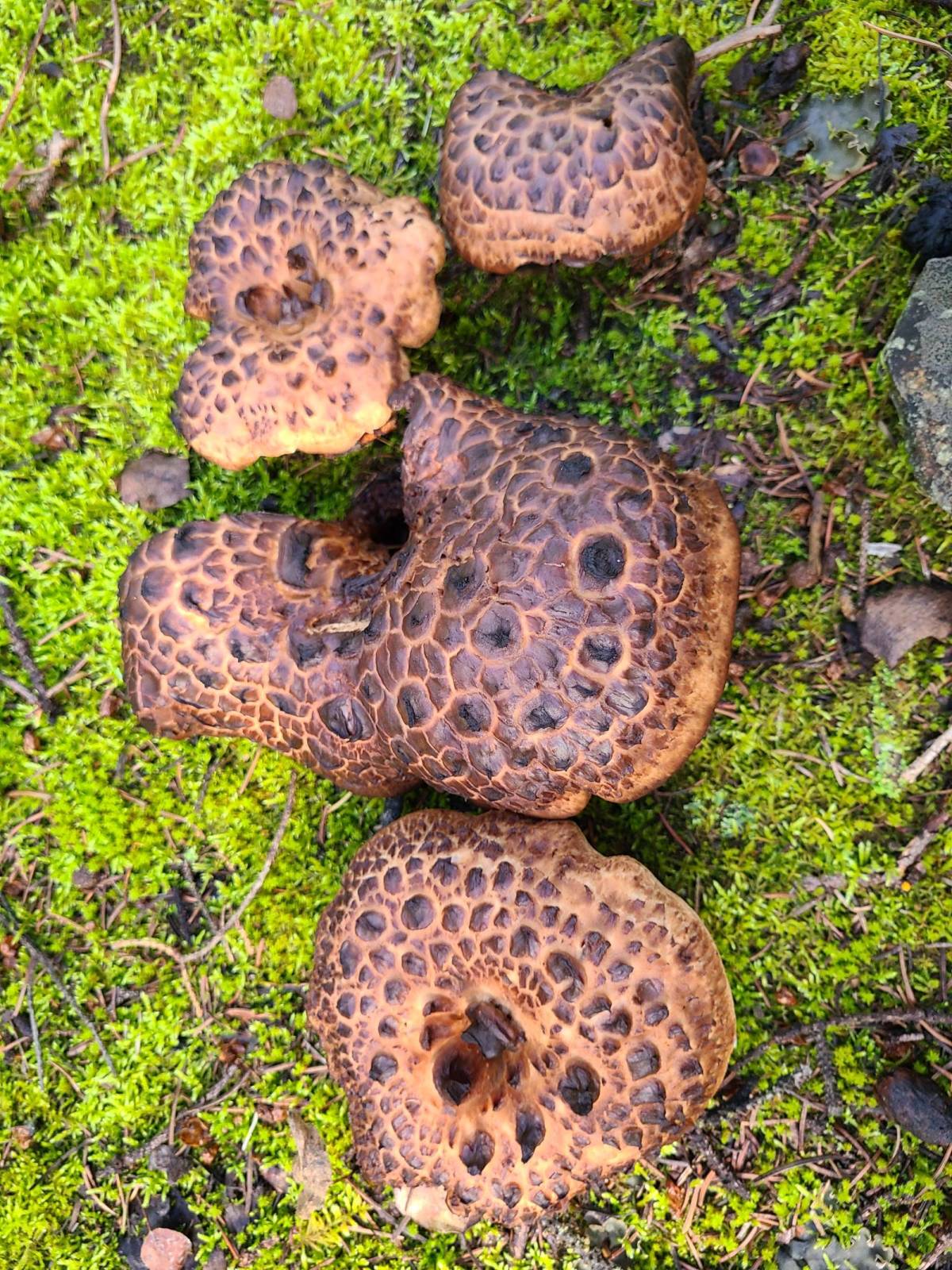
- Scaly hedgehog (Sarcodon imbricatus). Also known as hawk’s wing, this distinctive woodland mushroom has a large scaly cap and tooth-like spines beneath the cap instead of gills.
- Snowbank fairy helmet (Mycena overholtsii). A high-elevation snowbank fungus that fruits on decaying conifer wood during and shortly after spring snowmelt.
- Emperor mushroom (Agaricus julius). Colorado’s official state mushroom, this large Rocky Mountain species grows in high-elevation conifer forests and is recognizable by its brown-scaled cap and distinctive almond-like aroma.
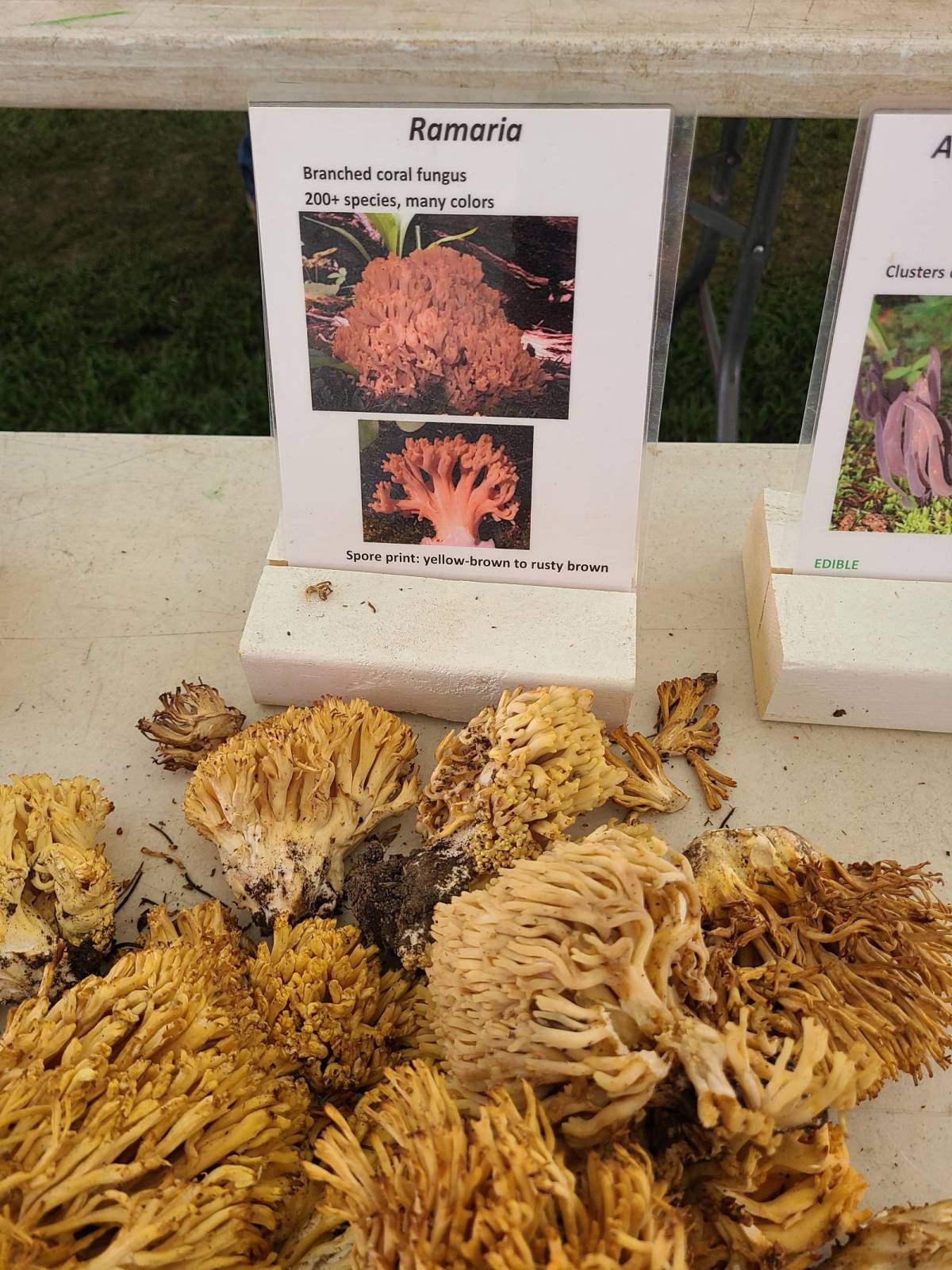
- Cauliflower fungus (Sparassis sp.). A large, intricately folded fungus resembling a head of cauliflower, typically found at or near the base of conifers.
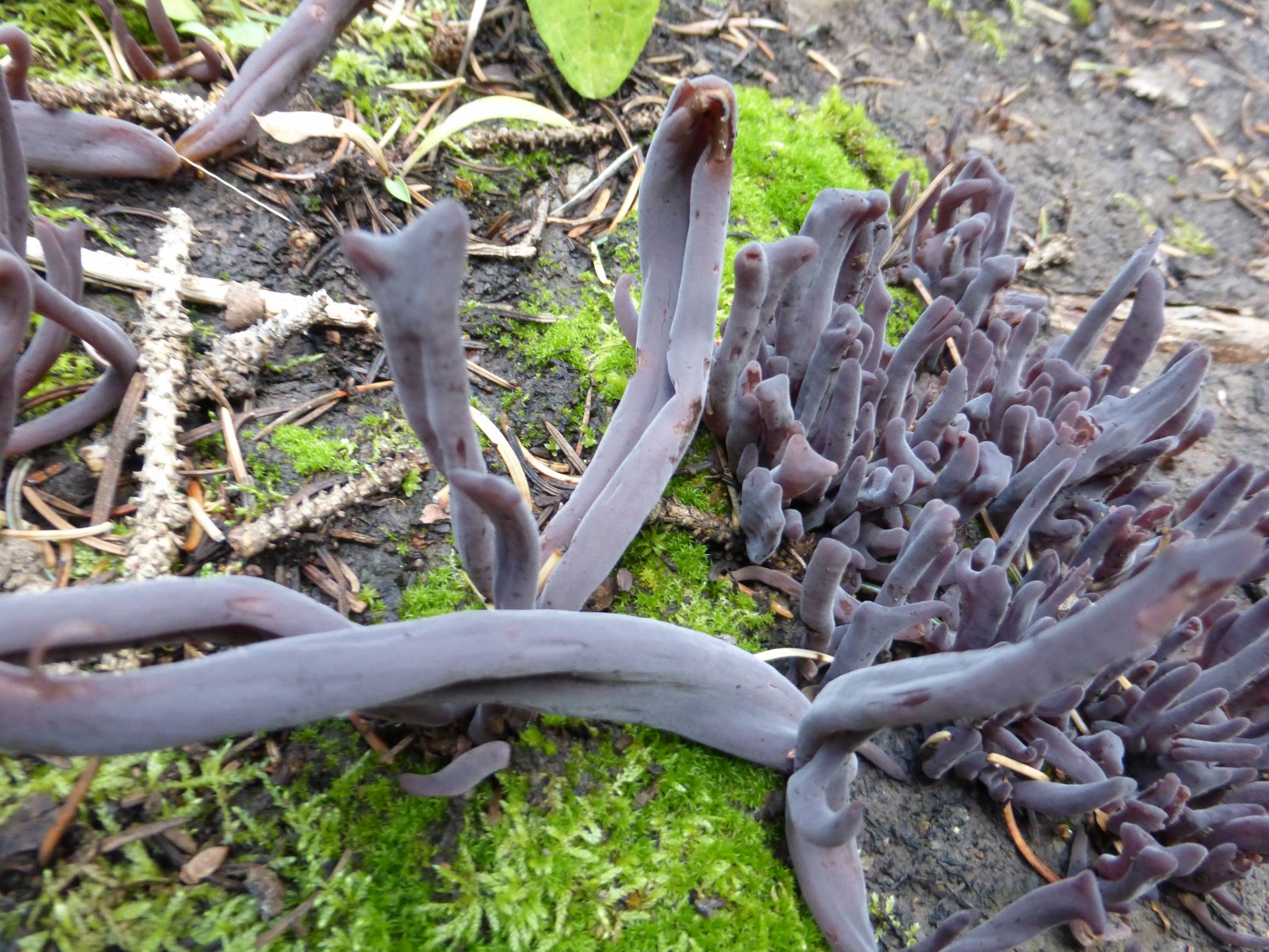
- Purple coral (Alloclavaria purpurea). A striking purple to lavender coral fungus that forms clusters of slender, upright clubs on the forest floor.
- Wood ear (Auricularia americana). A brown, gelatinous, ear-shaped fungus that grows on dead conifer wood and can become especially conspicuous after rain.
- Yellow-green Russula mold (Hypomyces luteovirens). A parasitic fungus that attacks Russula mushrooms, gradually covering parts of its host with a yellow to green crust.
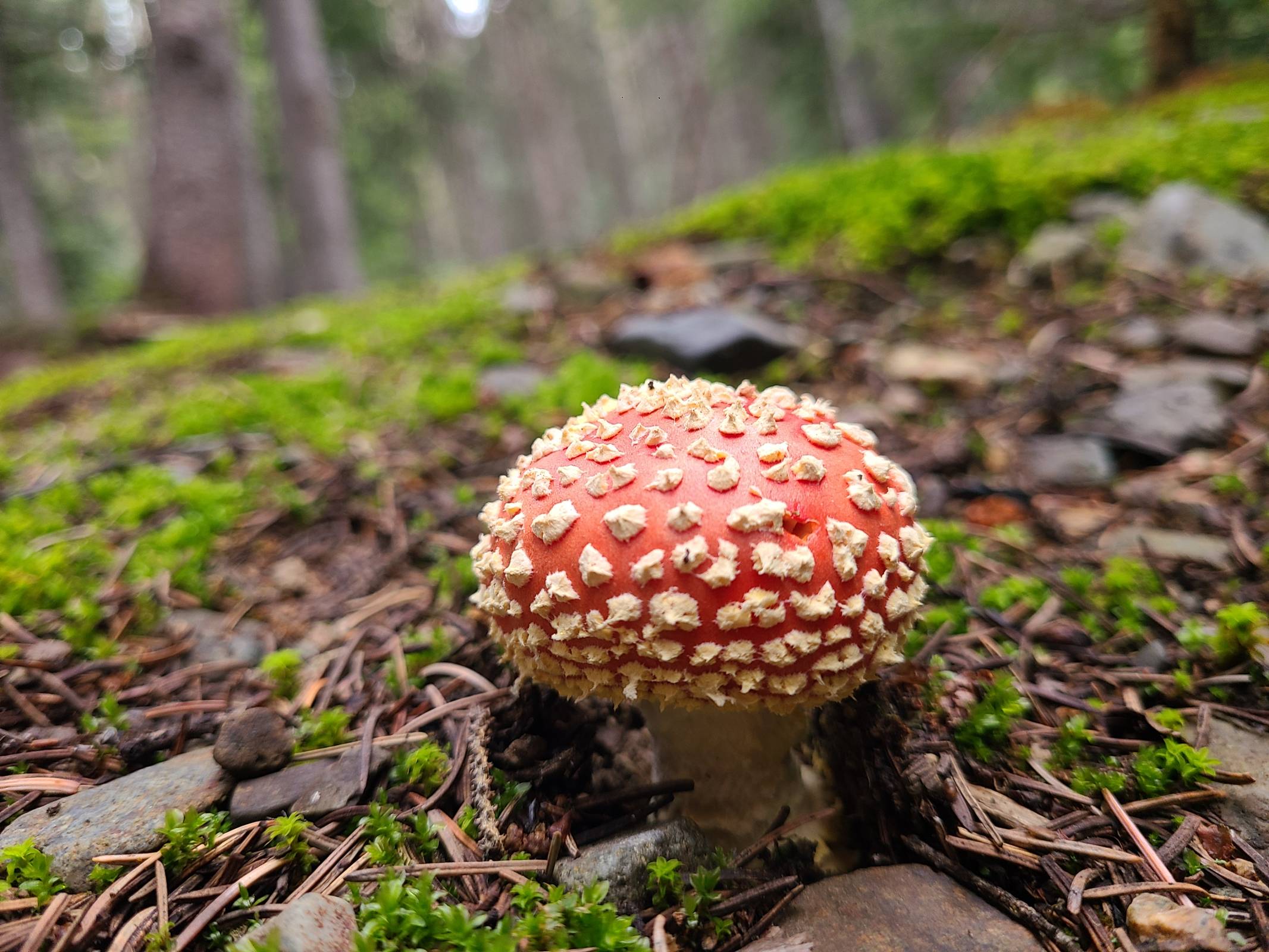
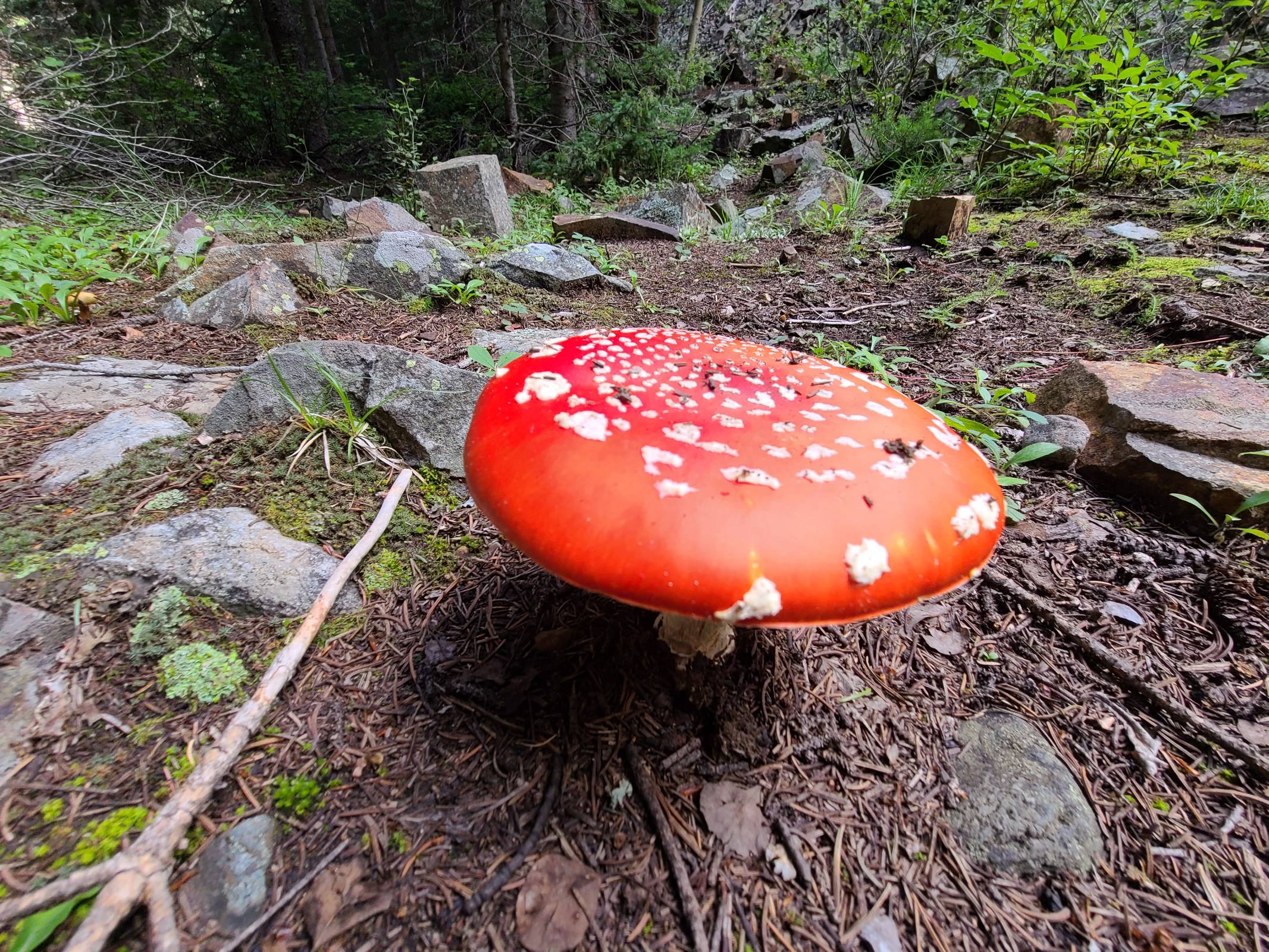
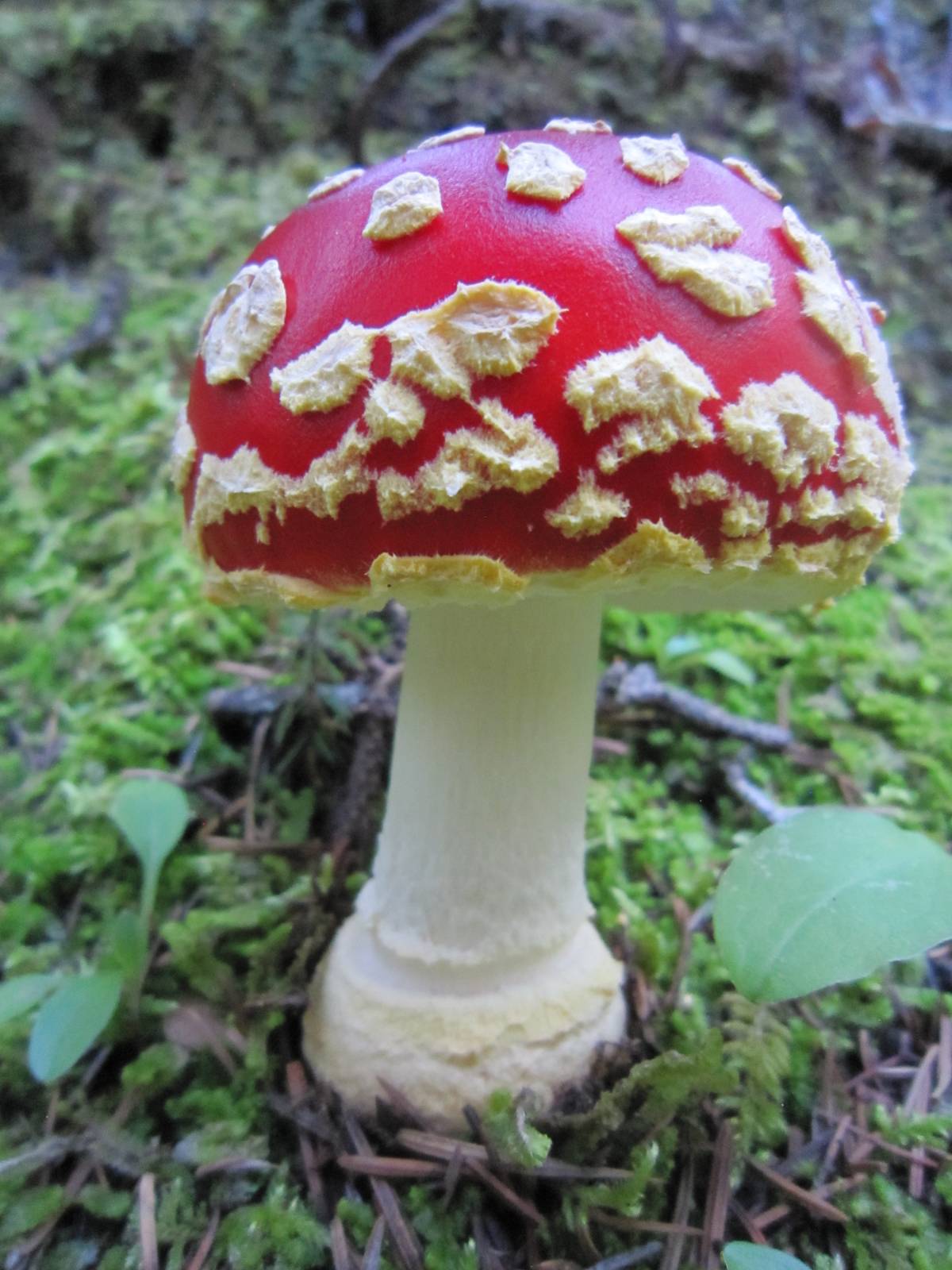
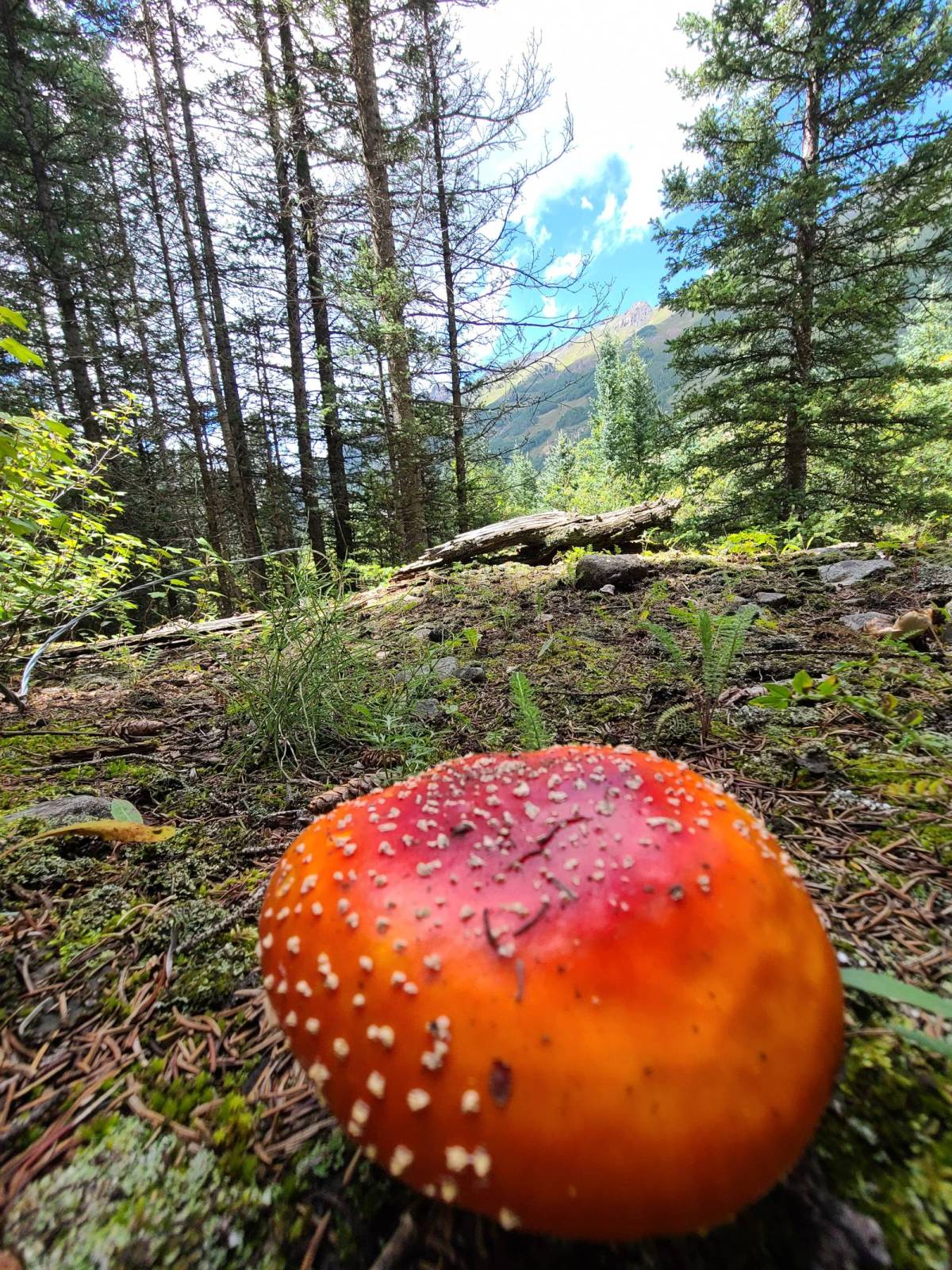
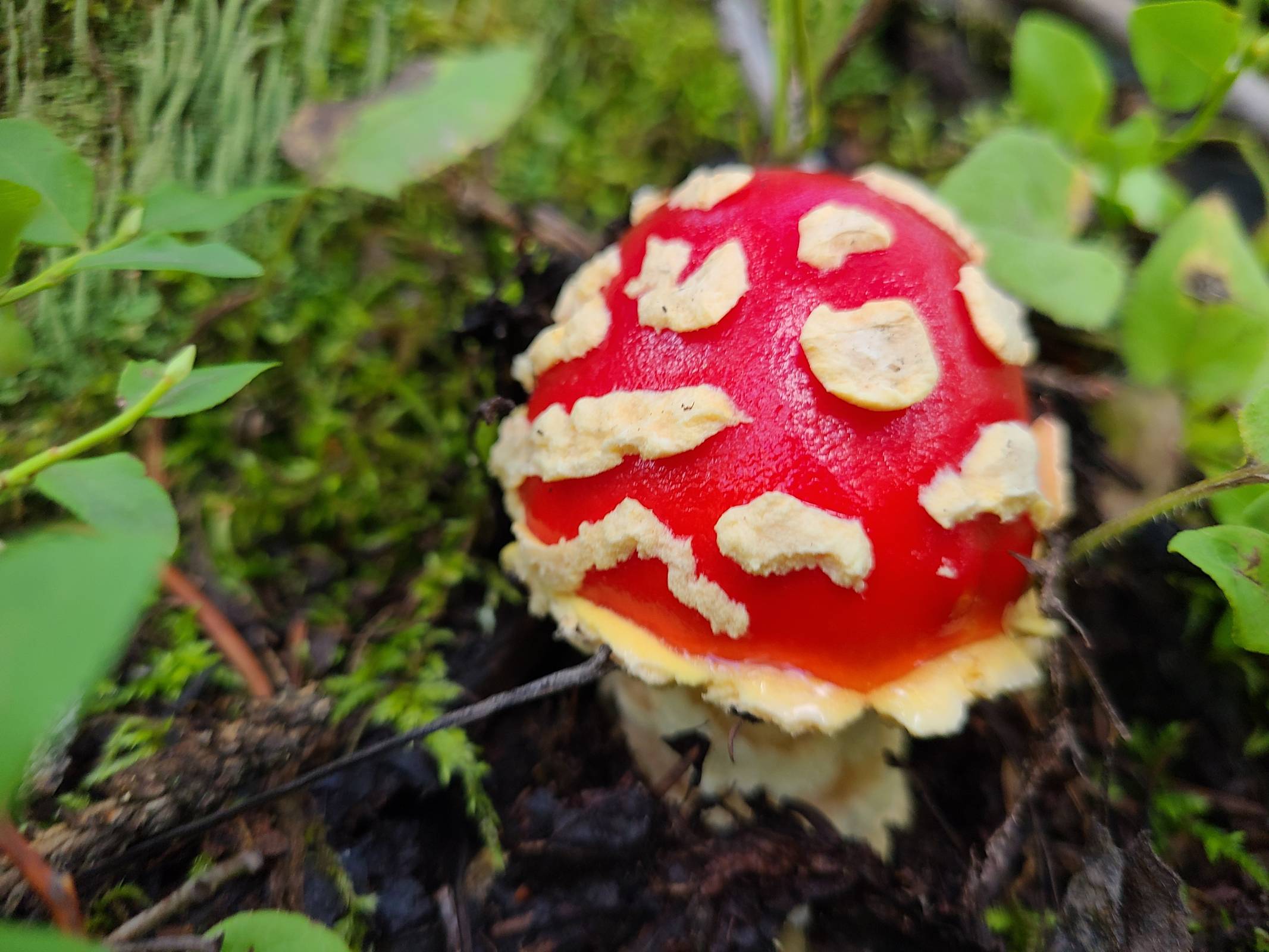
- Fly agaric (Amanita muscaria complex). One of the most recognizable mushrooms around Telluride, with a red to orange cap typically covered in pale remnants of its universal veil.
- Gilled polypore (Gloeophyllum sepiarium). A tough, wood-decaying fungus found on dead conifers, distinguished from most polypores by its gill-like fertile surface.
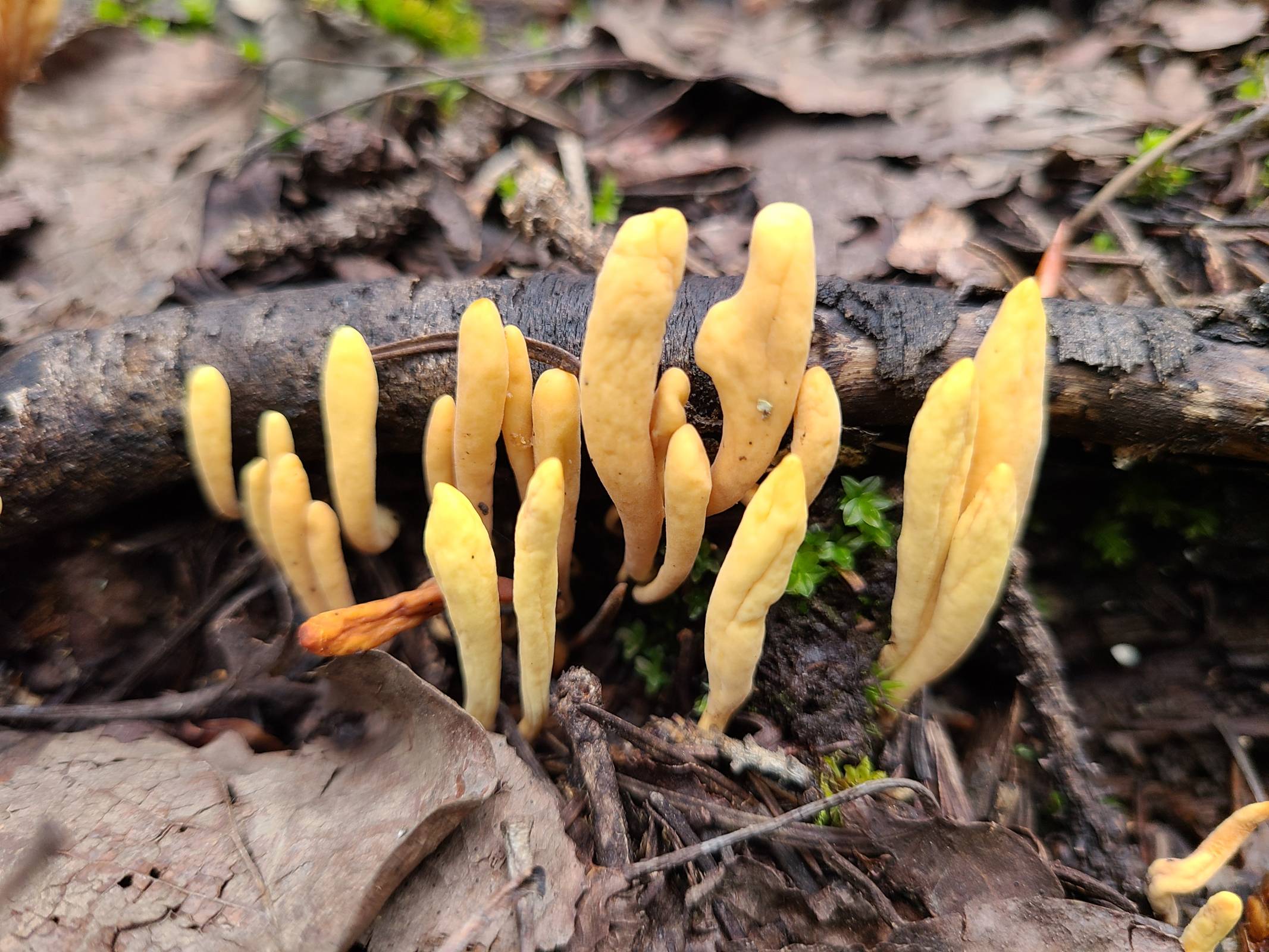
- Entomopathogenic fungi (Cordyceps and related genera). These unusual parasitic fungi infect insects and other arthropods, sometimes producing conspicuous fruiting bodies from their hosts.
- False morels (Gyromitra spp.). Several species occur in Colorado, recognizable by their irregular, folded or brain-like caps and sometimes encountered around spring snowmelt.
- Elfin saddles (Helvella spp.). A diverse group of fungi that includes species with distinctive saddle-shaped, lobed or cup-shaped caps.
- Cup fungi (Peziza spp.). Fragile, cup-shaped fungi found on soil, decaying wood and other organic material; many species are difficult to distinguish without microscopic examination.
- Lobster mushroom (Hypomyces lactifluorum). A parasitic fungus that attacks Russula and milk-cap mushrooms, transforming its host with a distinctive bright orange-red exterior.
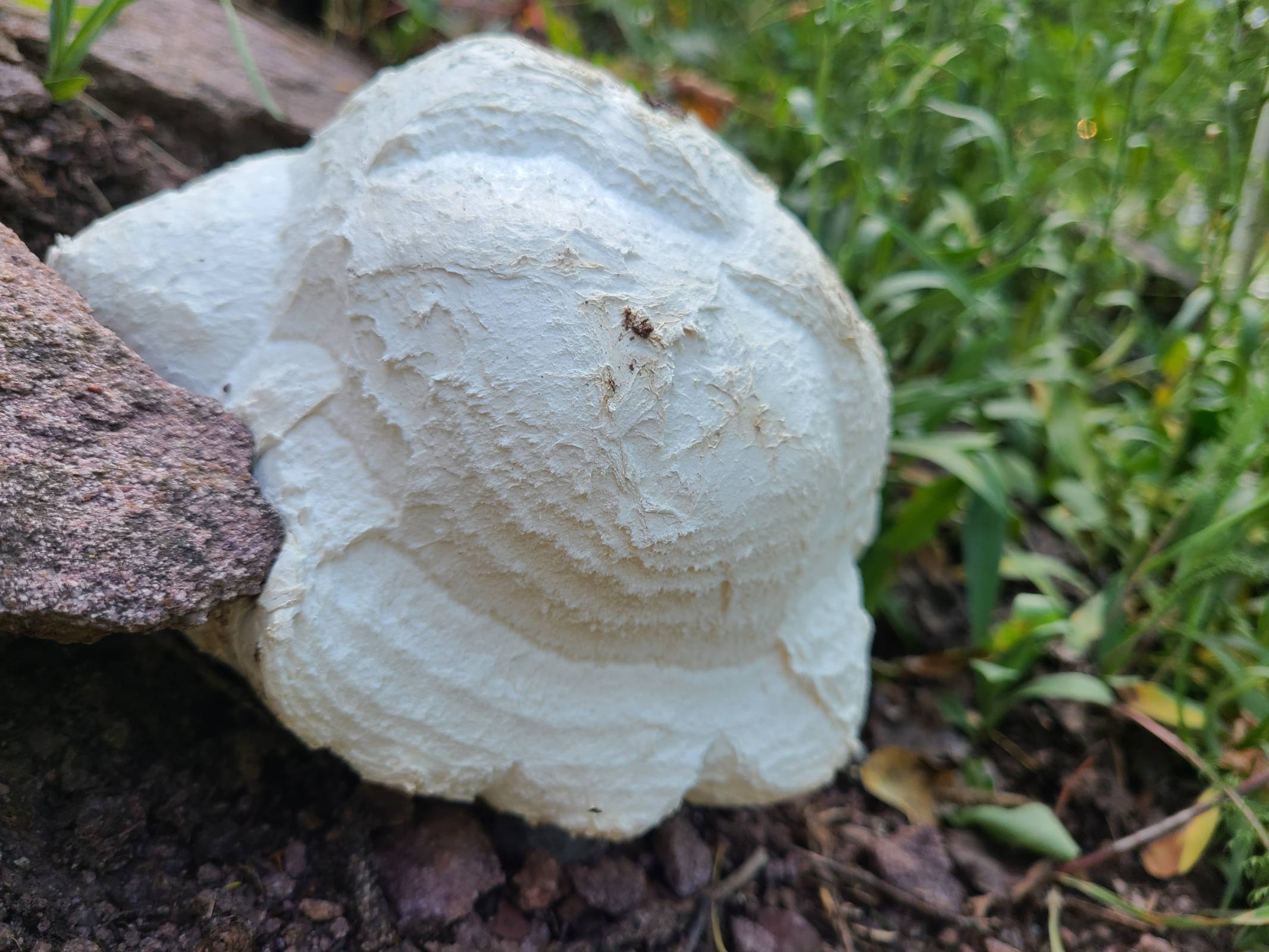
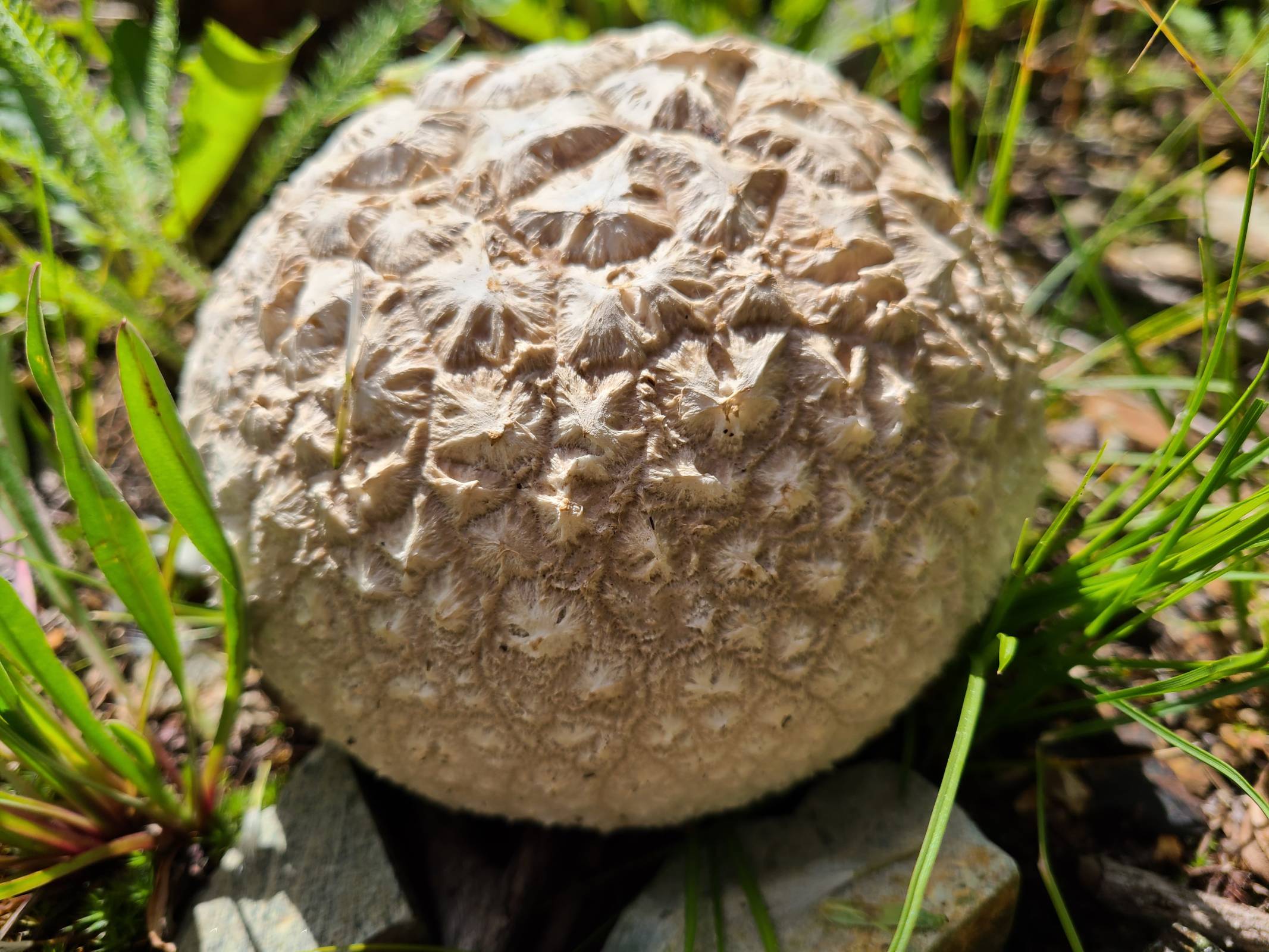
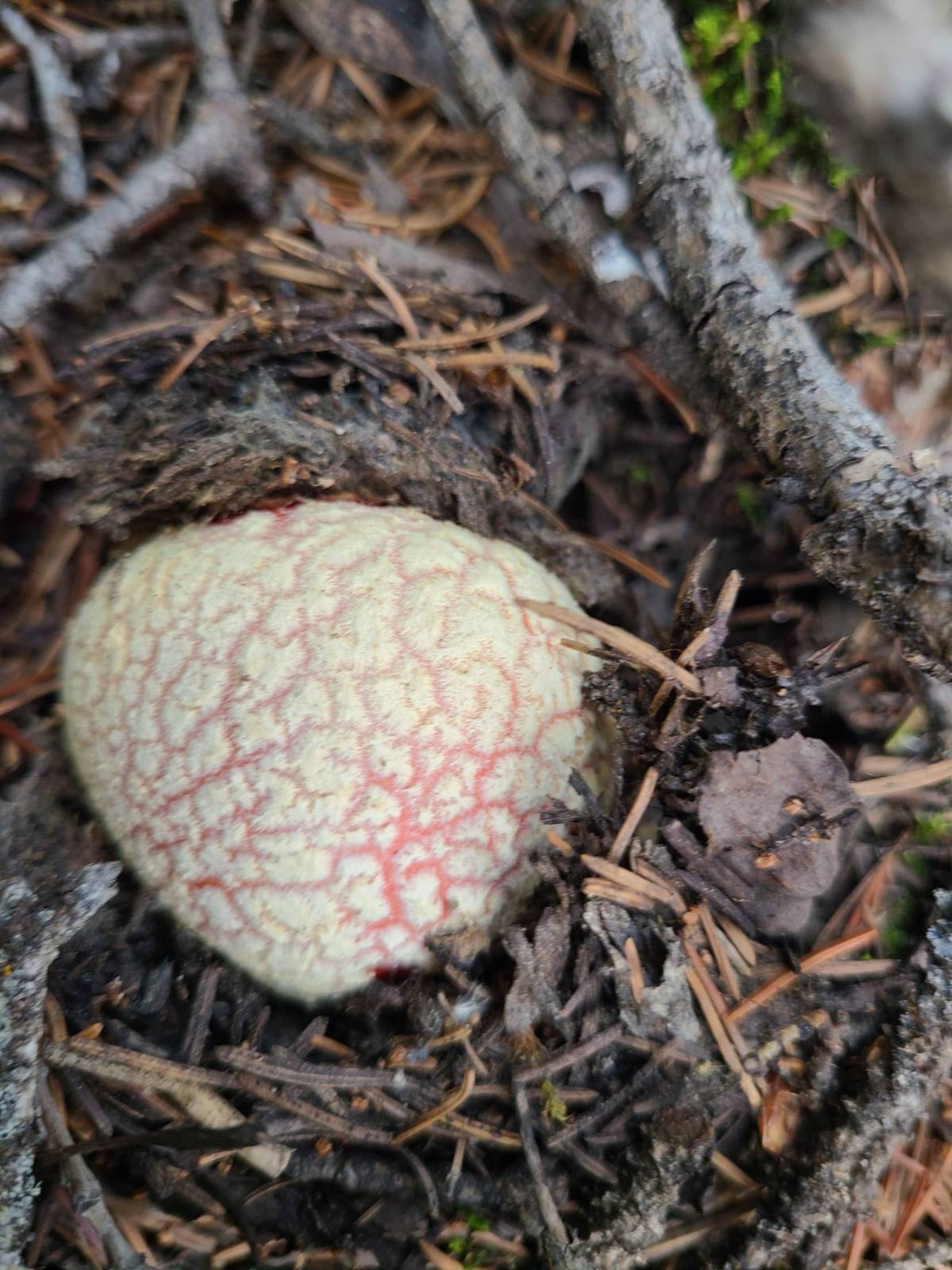
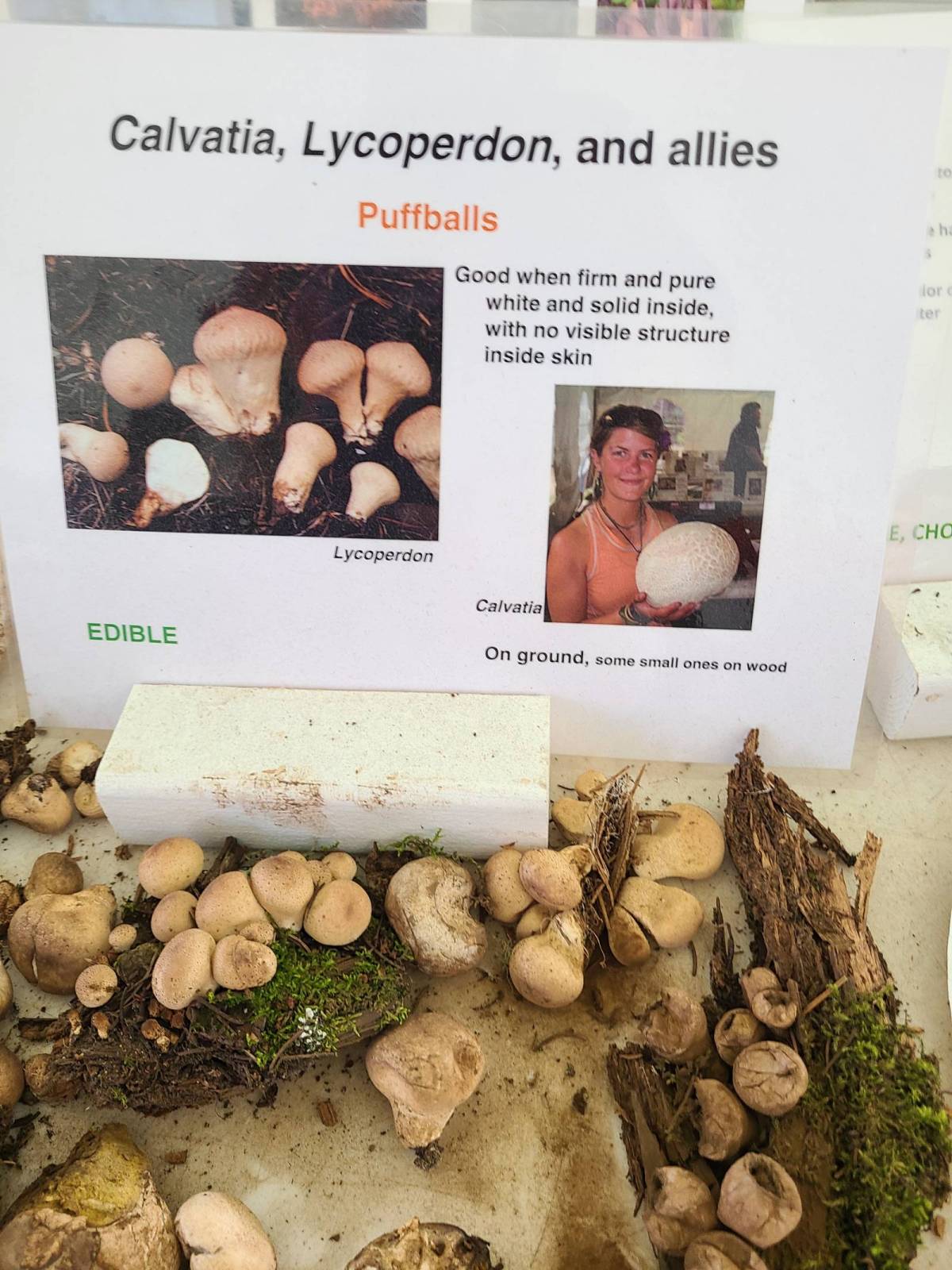
- Western giant puffball (Calvatia booniana). A large western North American puffball with a white to tan exterior that often develops conspicuous polygonal scales or plates.
- Floccularia (Floccularia spp.). Robust terrestrial mushrooms found in western conifer forests and mountain habitats.
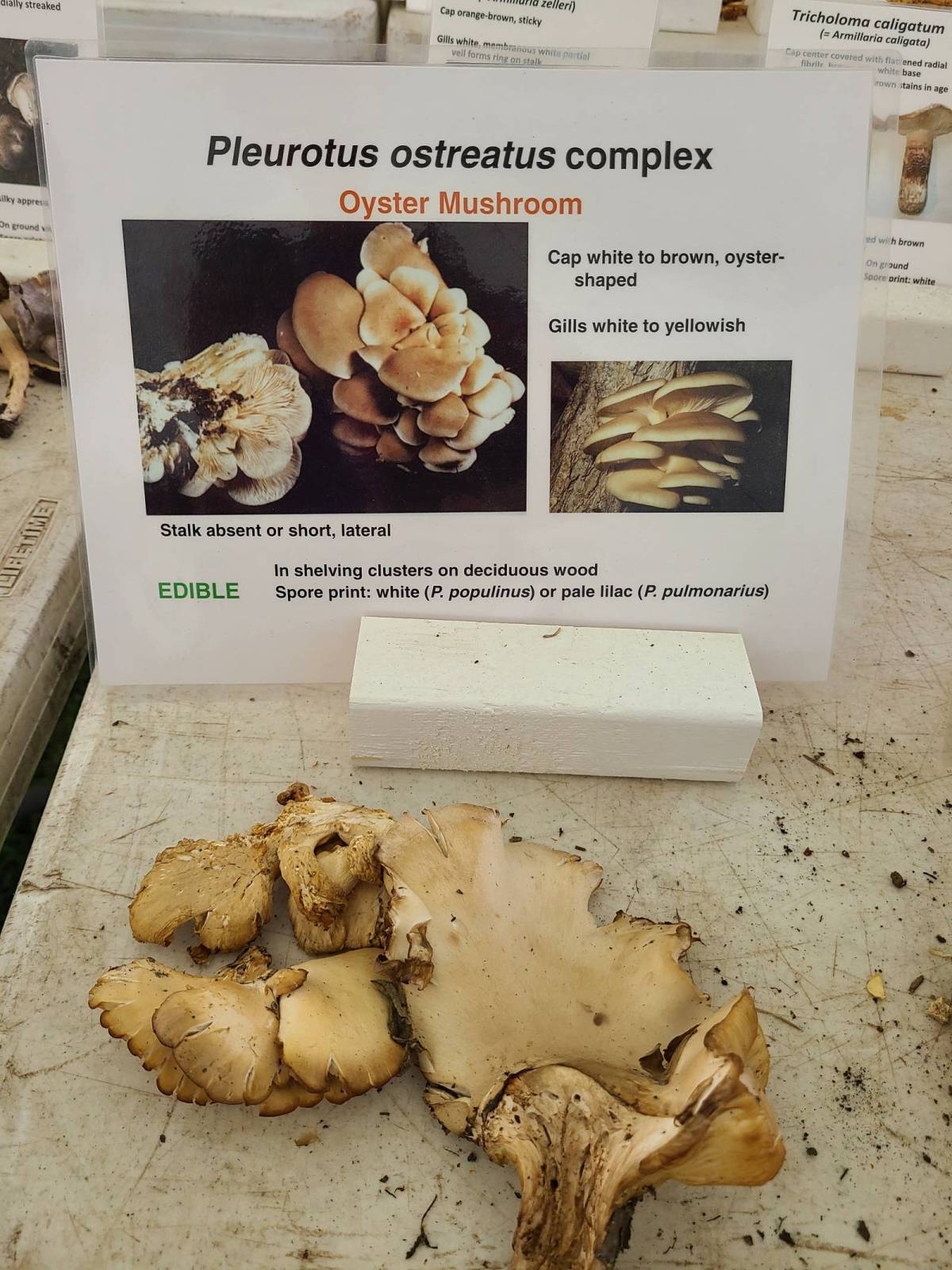
- Aspen oyster (Pleurotus populinus). A pale oyster mushroom that grows in clusters on dead and dying aspen and other poplars in the Rocky Mountains.
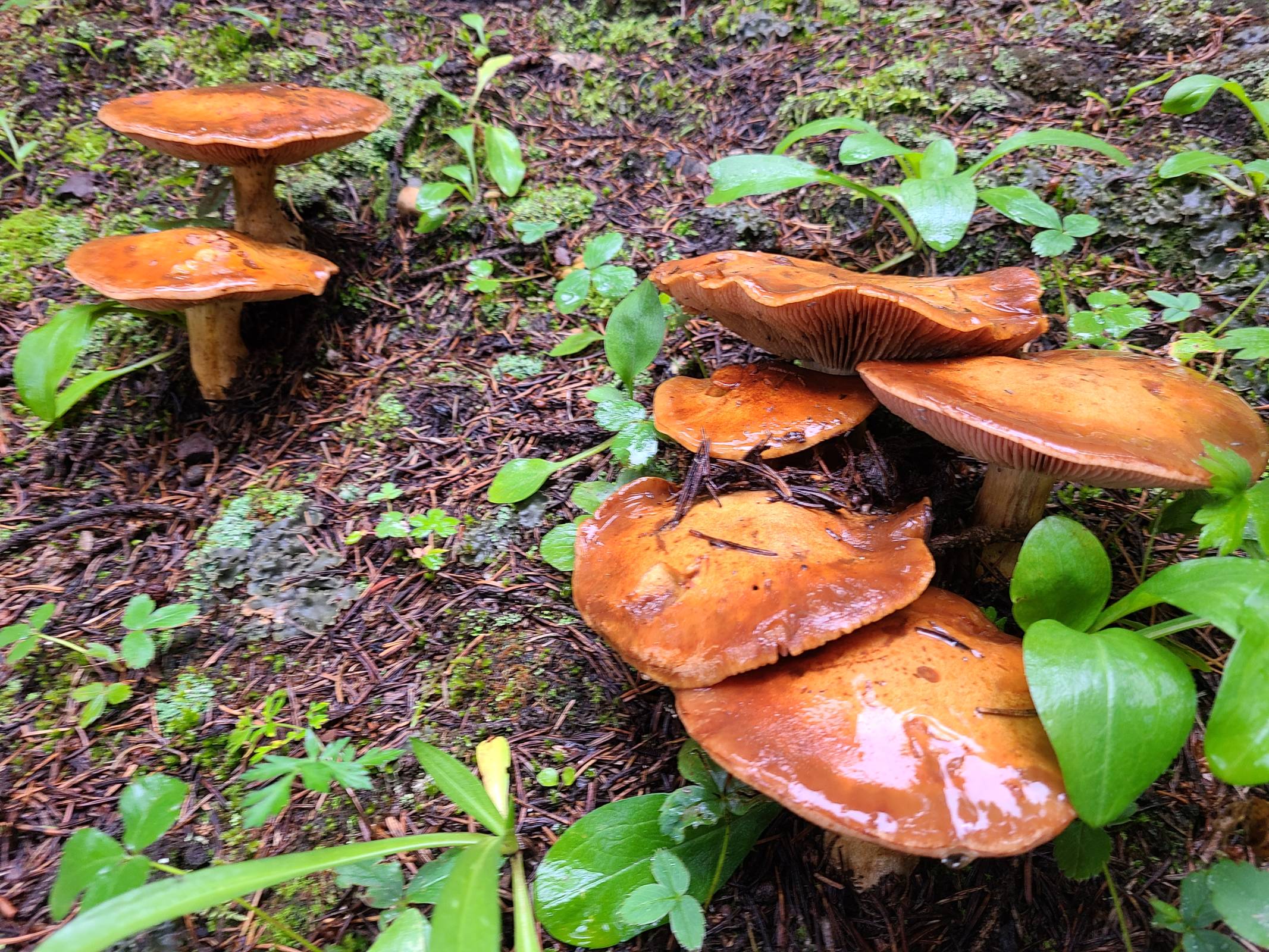
- Shrimp Russula (Russula xerampelina complex). A common Telluride-area mushroom whose mature fruiting bodies are known for a distinctive shrimp-like odor.
- Western matsutake (Tricholoma murrillianum). A prized edible mushroom found in western conifer forests, recognizable by its firm white flesh and distinctive spicy aroma.
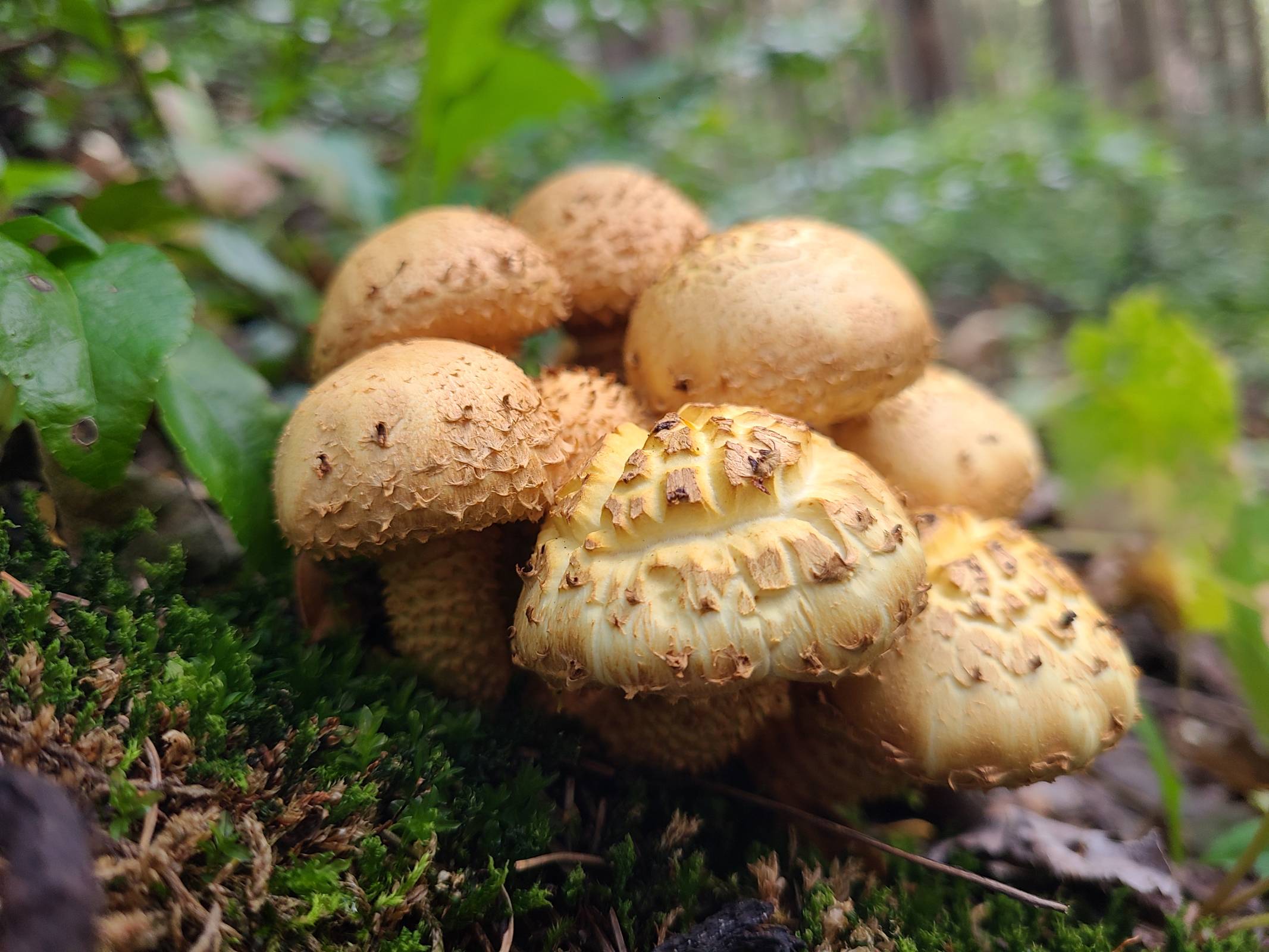
- Scaly Pholiota (Pholiota squarrosa). A conspicuous wood-decaying mushroom that grows in dense clusters around stumps and tree bases, with yellow-brown caps and stems covered in darker scales.
- Webcaps (Cortinarius spp.). A large and diverse group of mushrooms well represented in the Telluride area, often recognized when young by the cobweb-like partial veil, or cortina, between the cap and stem.