Getting up Waterfall Canyon in mid-June usually means encountering at least some lingering snow. In 2026 there was very little. Telluride had come through an unusually warm, dry winter, with the ski season opening late and ending early as the snowpack deteriorated.
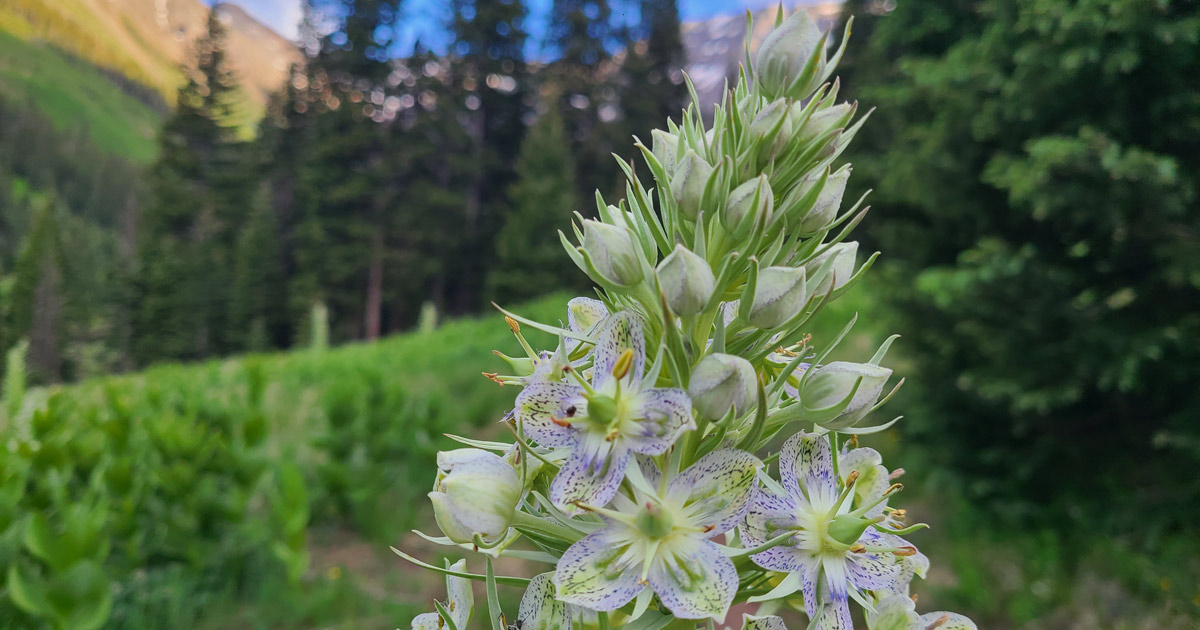
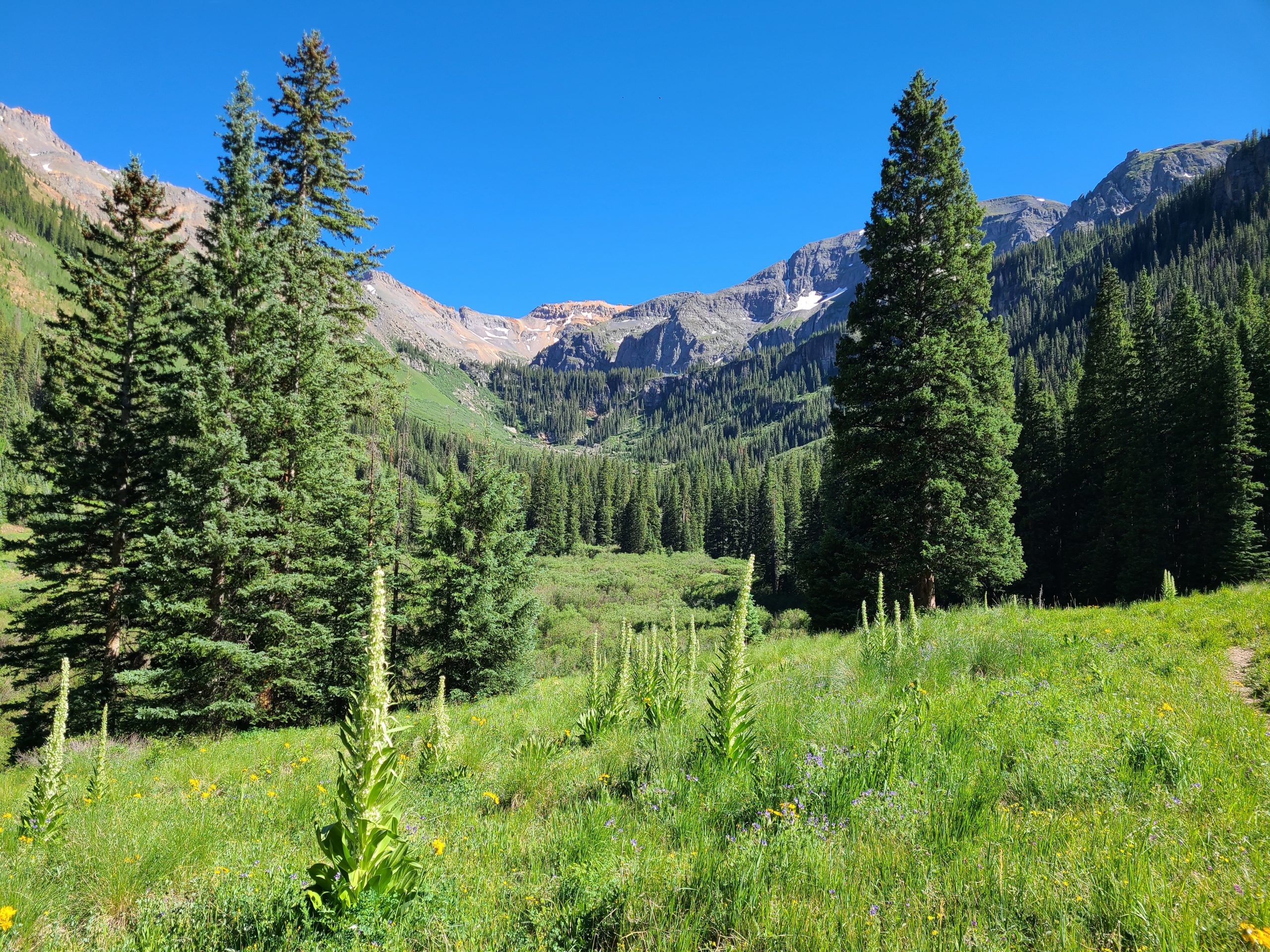
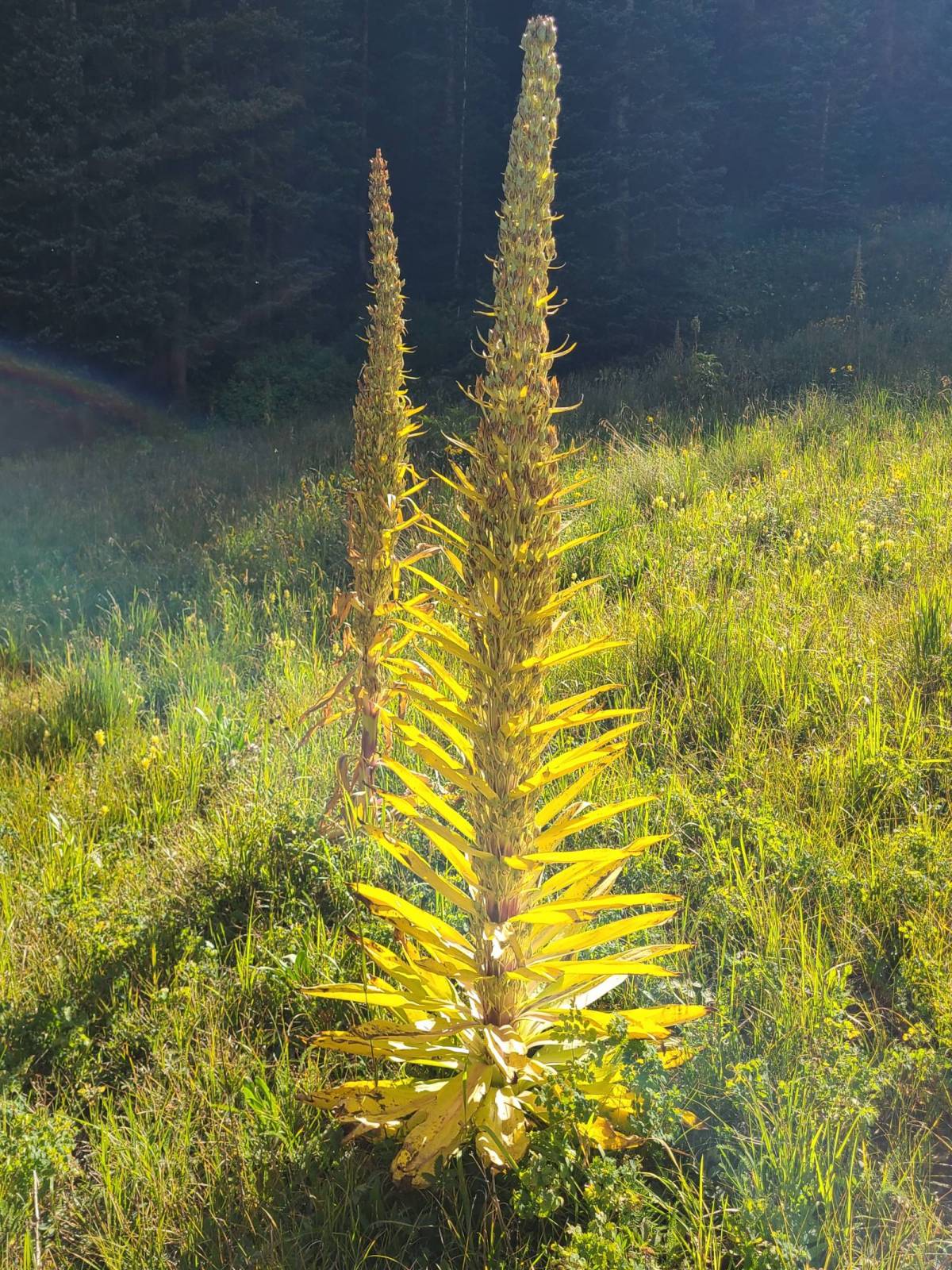
On June 13, approaching the broad meadow and creek crossing around 10,500 feet, I noticed tall green stalks rising above the surrounding vegetation, each carrying clusters of pale flowers. I do not remember seeing them flower there before, and I stopped to photograph one.
This is monument plant, also called green gentian. The scientific name is Frasera speciosa, and it is the largest gentian in the Rocky Mountains.
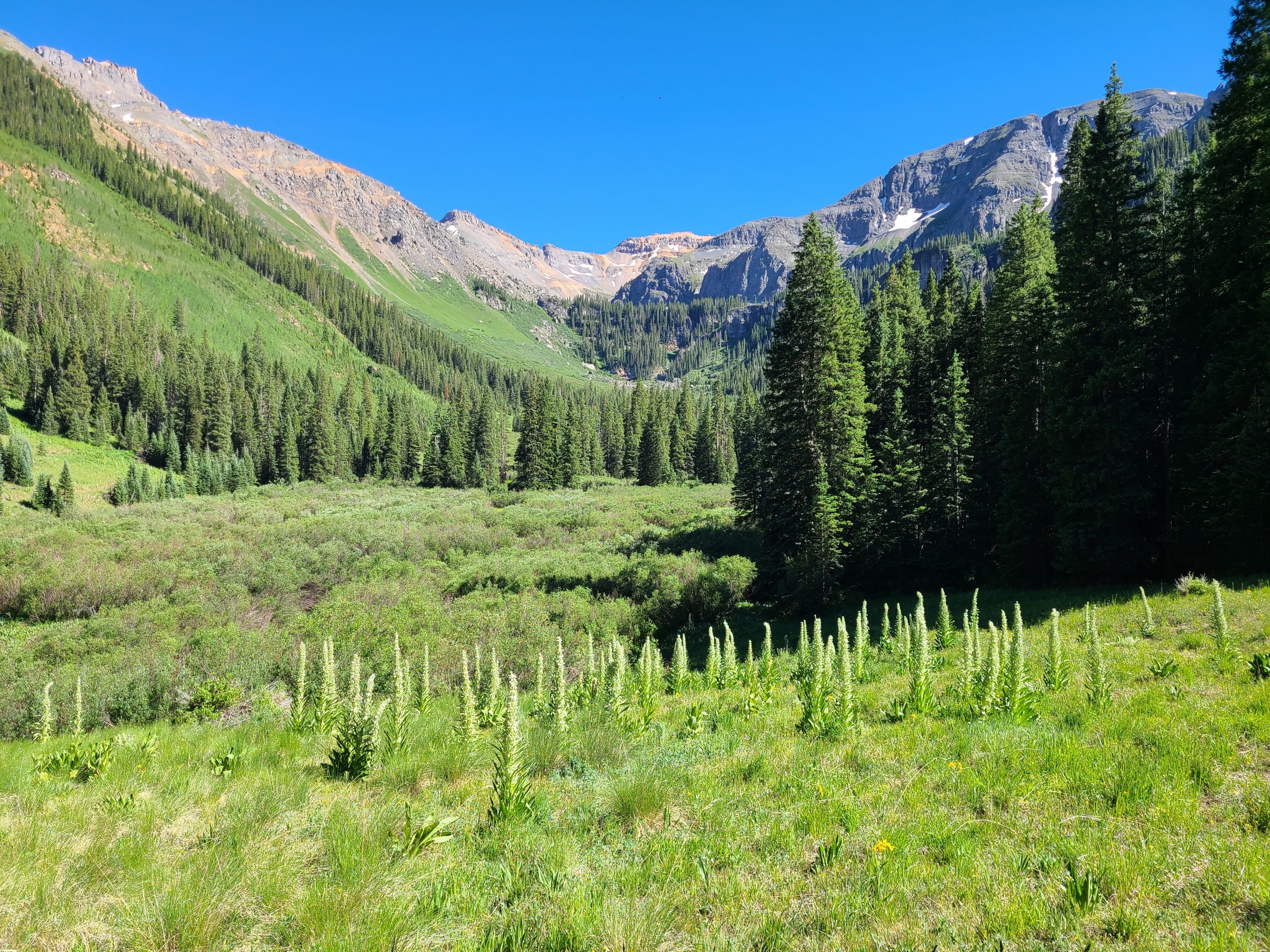
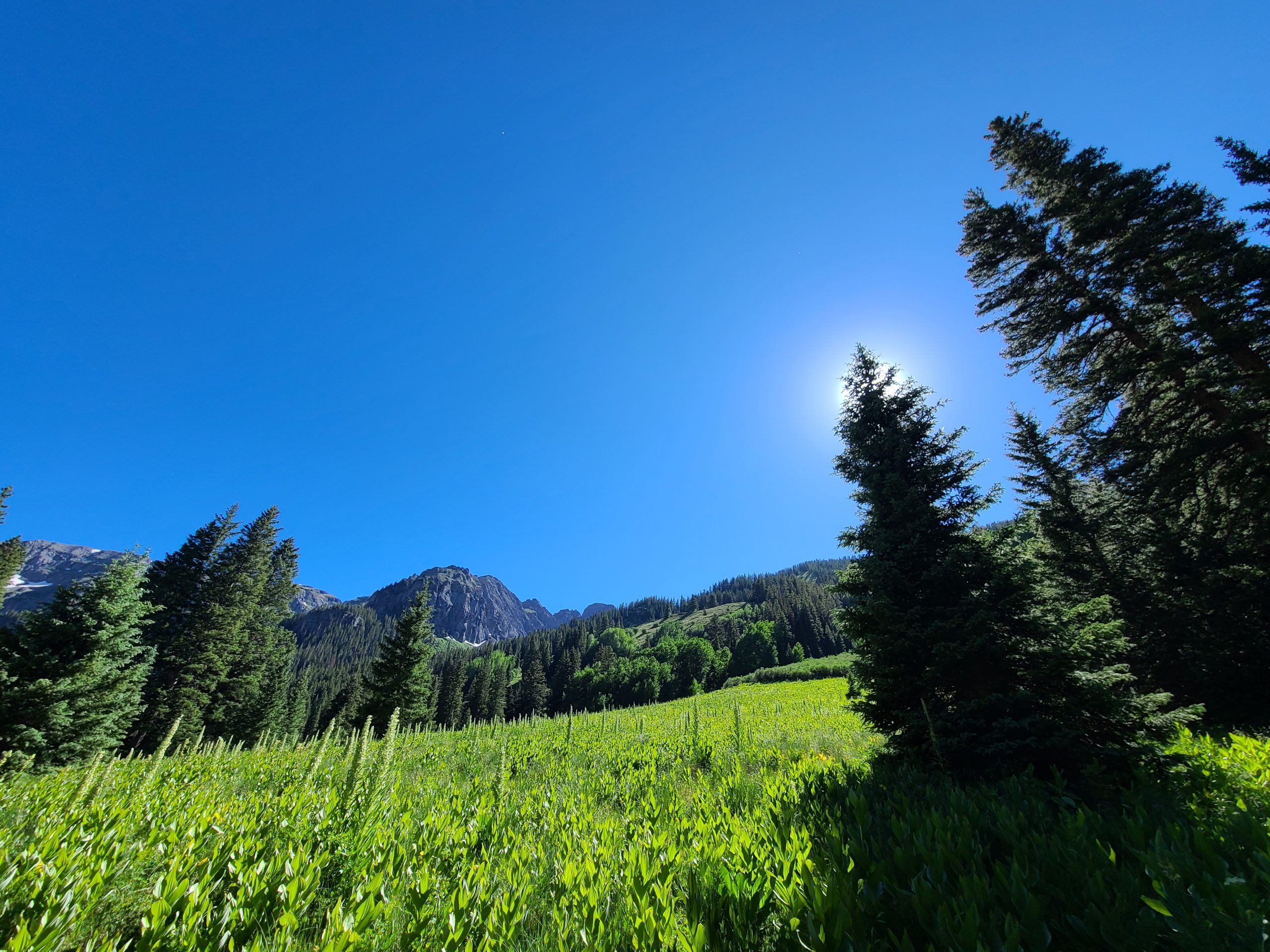
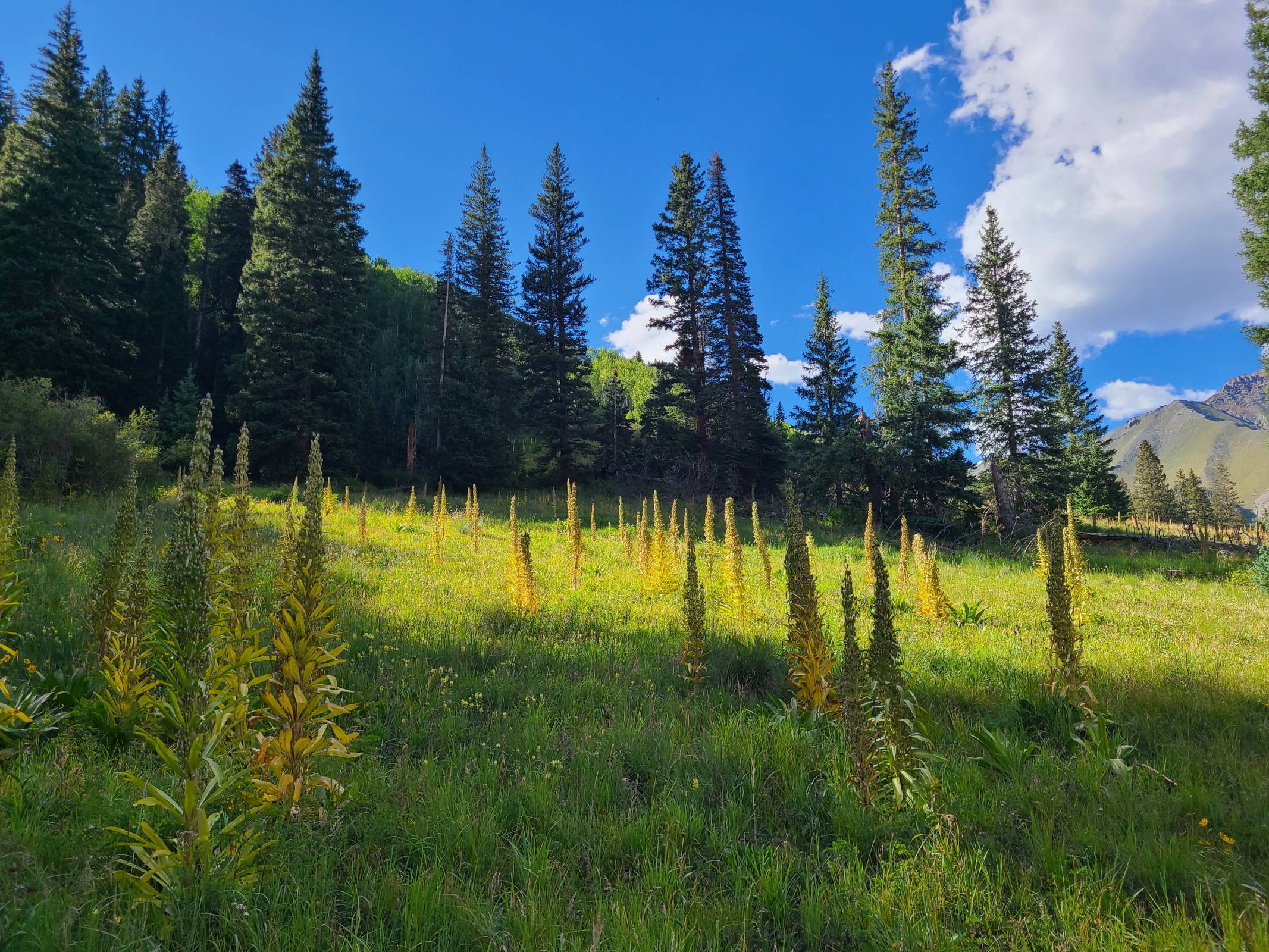
When I returned to the same area on June 29, the extent of the flowering was much easier to see. Stalks were scattered across the open ground and up the slopes. The same phenomenon was being documented elsewhere across the San Juan Mountains that June.
The timing was striking because the exceptionally dry winter and spring had been hard on many of the San Juans’ other wildflowers. Southwest Colorado botanist Al Schneider reported finding some plants entirely absent, others much smaller than normal, and others drying up before they could set seed. Yet on the same outing in the San Juans, he encountered an area roughly 100 feet by 50 feet containing about 400 flowering monument plants.
A difficult season for many wildflowers was, at the same time, an extraordinary year for this particular one. The dry winter was not what triggered the mass flowering. These plants had begun preparing for it years earlier.
A plant that spends decades getting ready
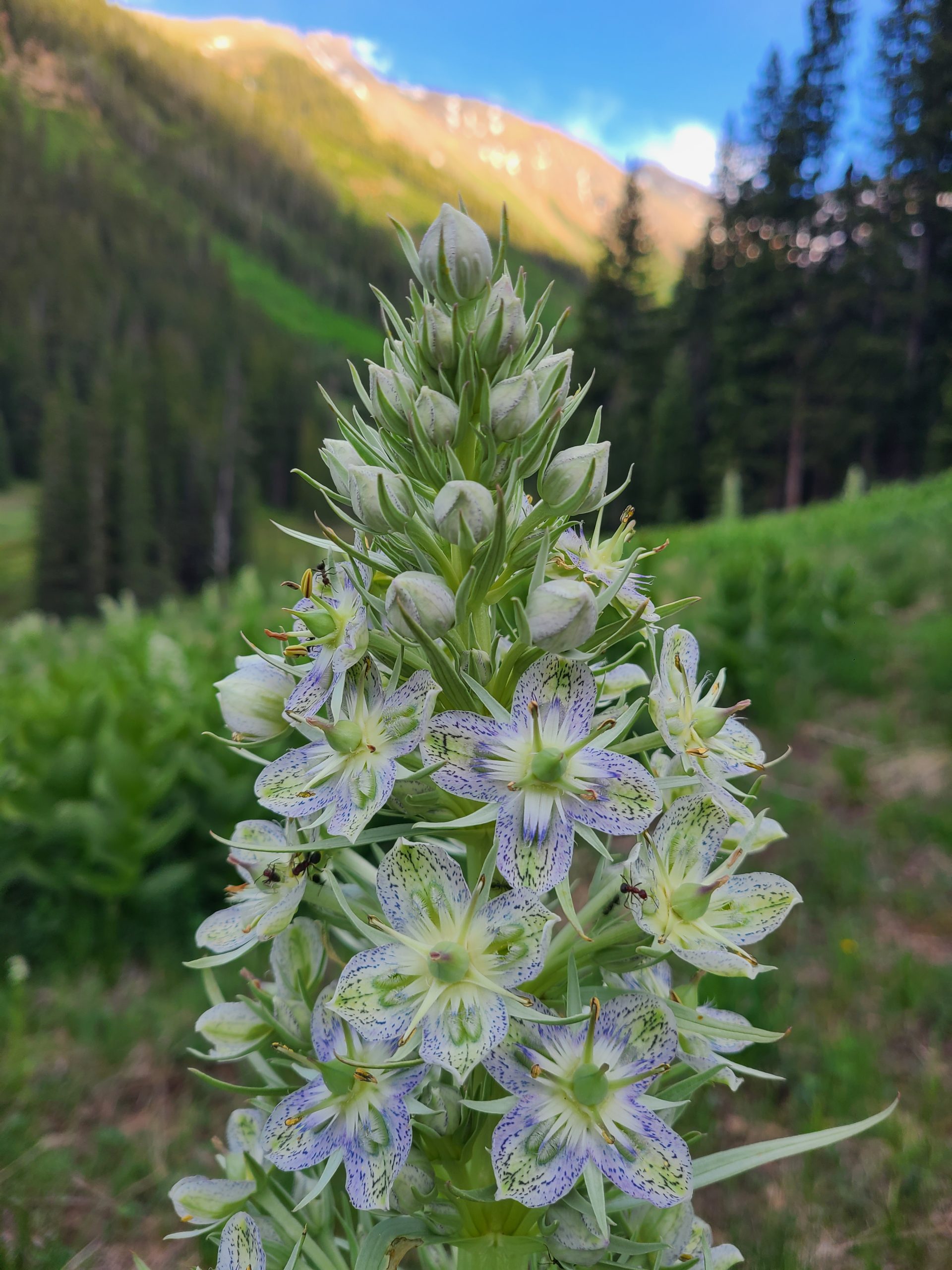
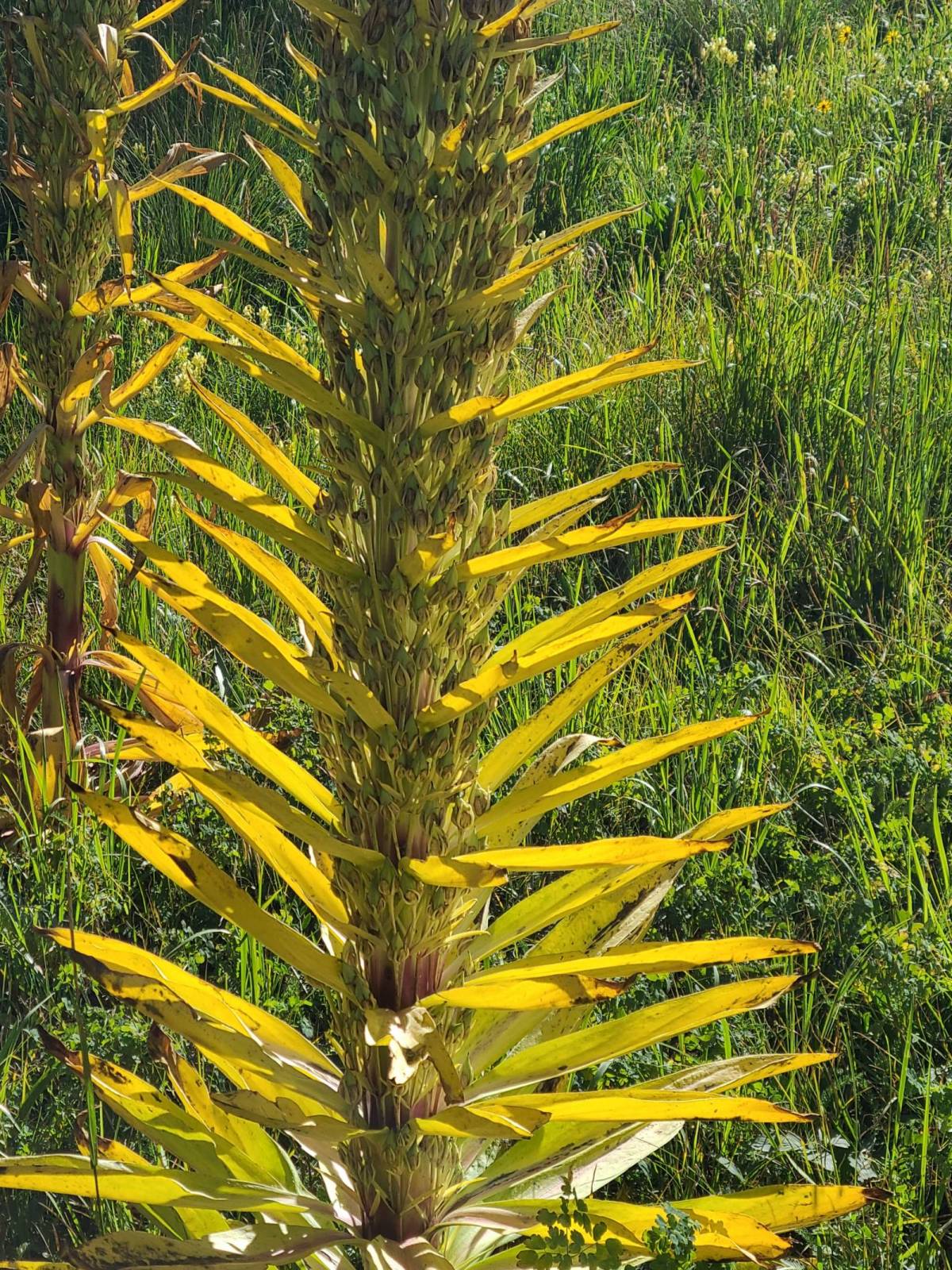
Look closely at the flowers. Each is a pale green and white star of four pointed petals, speckled with purple, and at the base of every petal is a pair of fringed pits where the nectar collects. From thirty feet away, a monument plant can look like little more than a tall green stalk. Up close, the flowers are remarkably intricate.
Getting to that point can take decades. Frasera speciosa is monocarpic: it grows for years, flowers once, and then dies. Estimates for the age at flowering range from 22 to 80 years. Until then, the plant remains a low rosette of long, strap-shaped leaves at ground level, growing year after year before producing its single flowering stalk.
David Inouye has been studying these plants at the Rocky Mountain Biological Laboratory near Crested Butte since the 1970s. In the East River Valley there, he puts the average at roughly 30 to 40 years before a plant has stored enough energy to flower. The stalk it finally produces can stand nine feet tall and averages about 600 flowers. Inouye knows the timing in part because he has followed plants he started from seed in 1982. The numbers shift with elevation: in alpine tundra, the same species may produce a stalk only about 40 centimeters tall.
The timing of that single flowering is determined years in advance. The RMBL monument plant profile reports that significant flowering is associated with above-average summer precipitation four years earlier. The developing flower stalk can then be detected inside the plant for roughly three years before it finally elongates. So the mass flowering visible across the San Juans in 2026 had its beginnings years before the tall stalks appeared.
Why so many of them do it at once
Monument plants have an unusual tendency to flower in the same years. David Inouye’s long-term counts near Crested Butte show just how dramatic the difference between years can be.
Since 1979, Inouye has counted flowering stalks along the Gothic Road from Mount Crested Butte to Emerald Lake. Some years he has seen only two. Then come years when thousands appear: in 2019, he counted a record 31,177. These large flowering events occur irregularly, generally two to eight years apart, and 2026 was the first major one there since 2019. By June, one plot in the Brush Creek drainage already had more flowering stalks than Inouye had recorded there in any year since he began his work.
The Crested Butte counts are from roughly a hundred miles away and don’t tell us how unusual the flowering in Waterfall Canyon was. But they do put what I saw there in context. My first photograph was of a single flowering plant. When I returned later that month, the broader display caught my attention, with flowering stalks scattered across the open terrain and up the hillsides.
After the flowers are gone
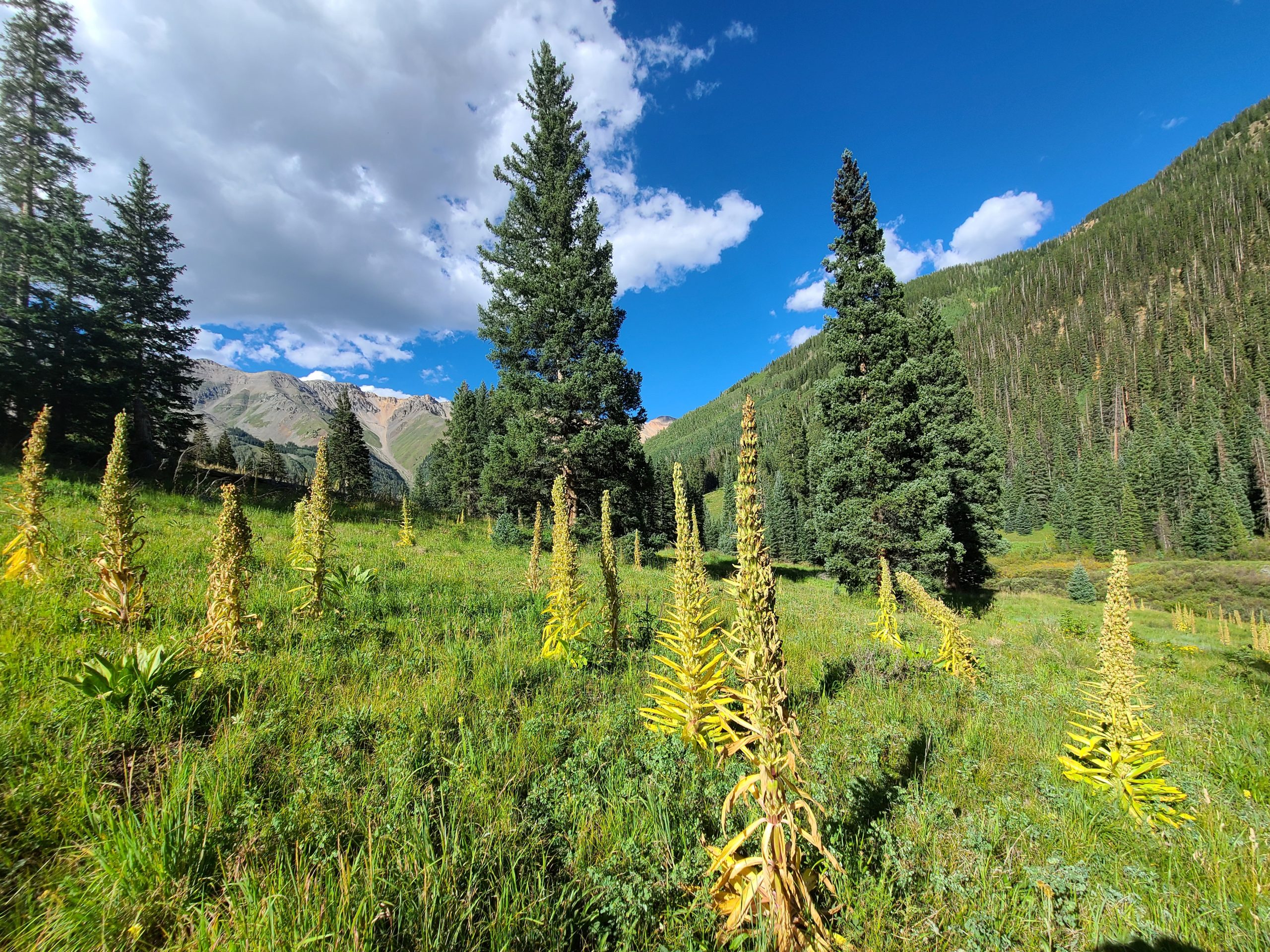
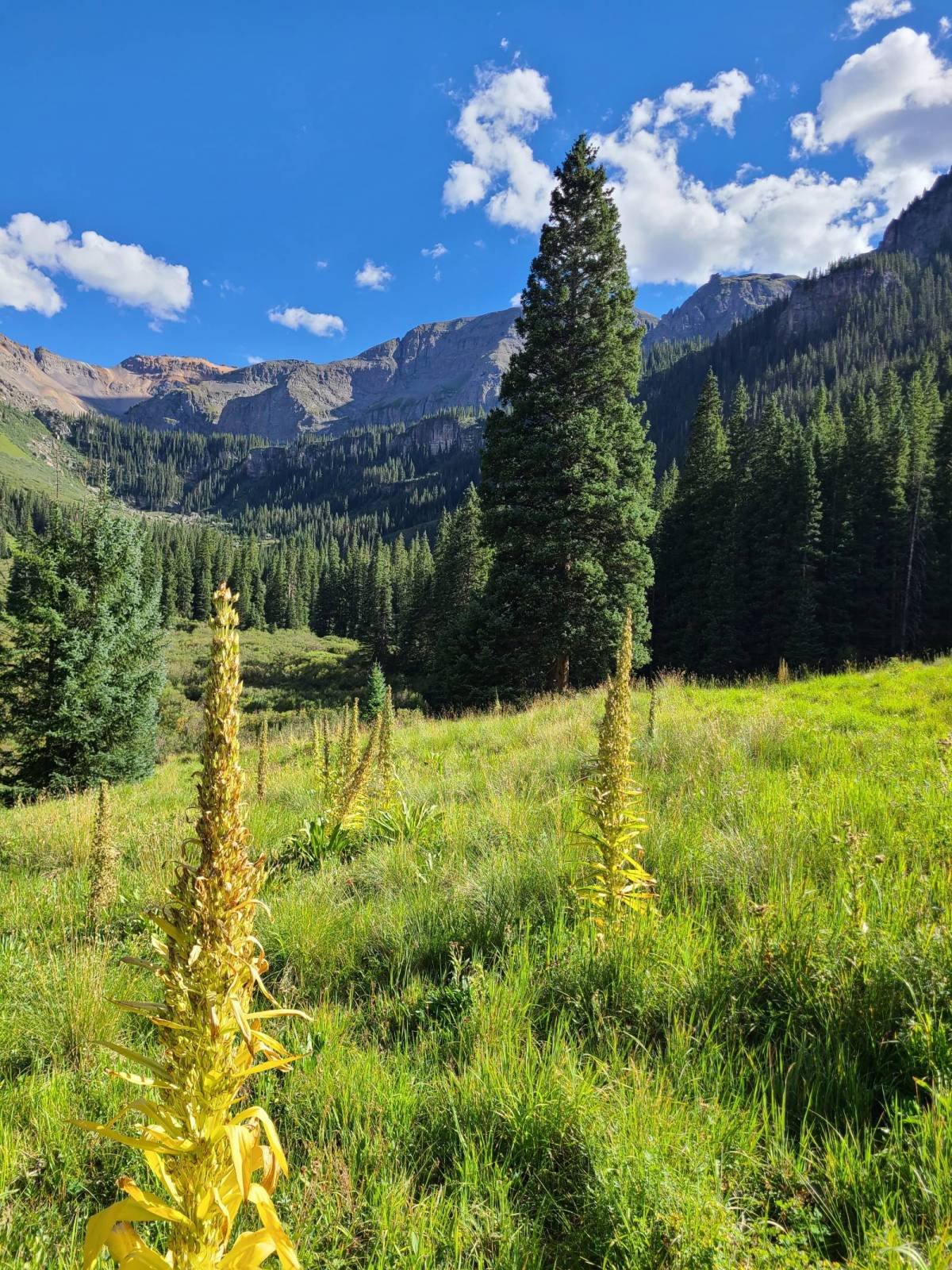
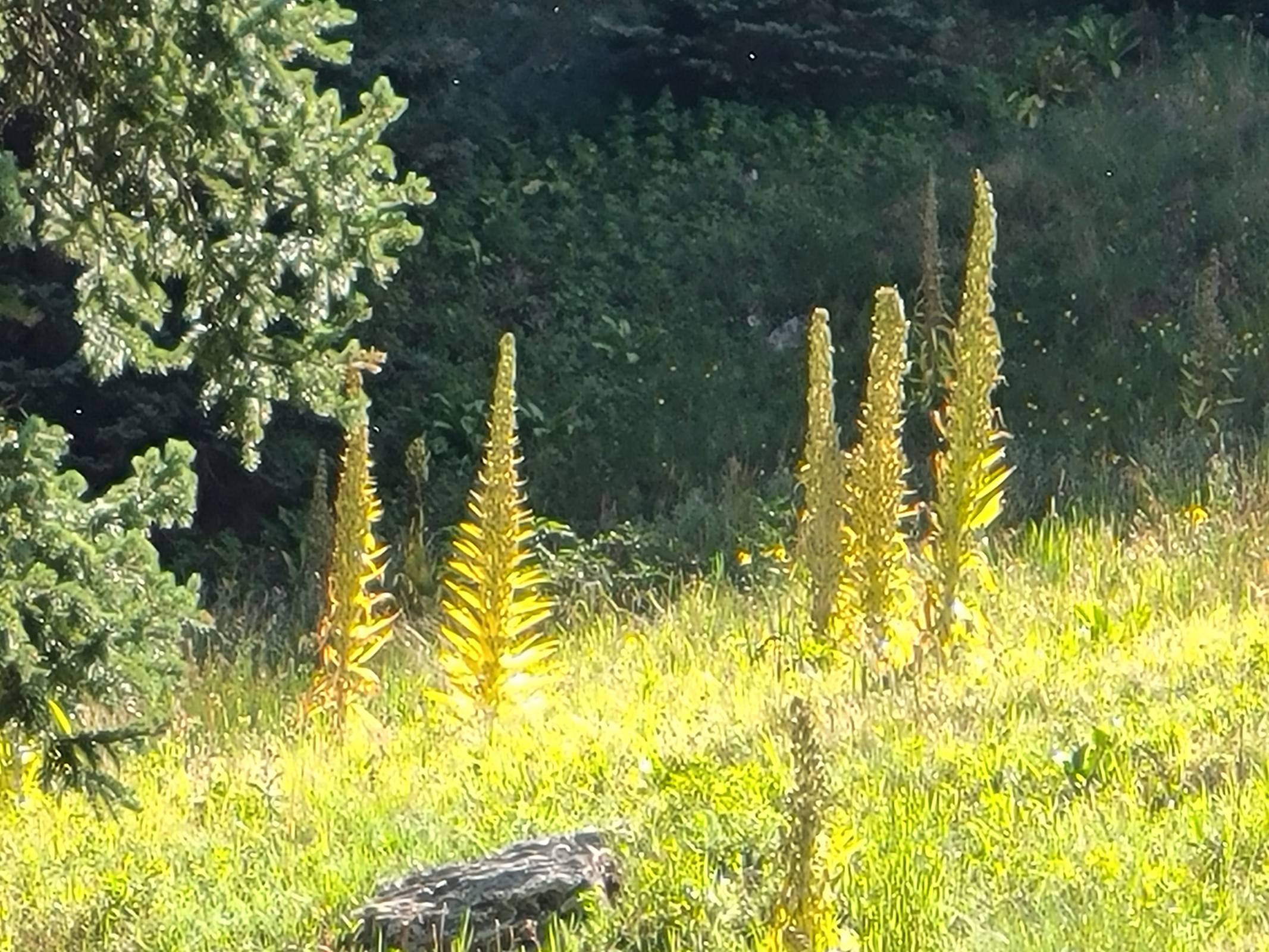
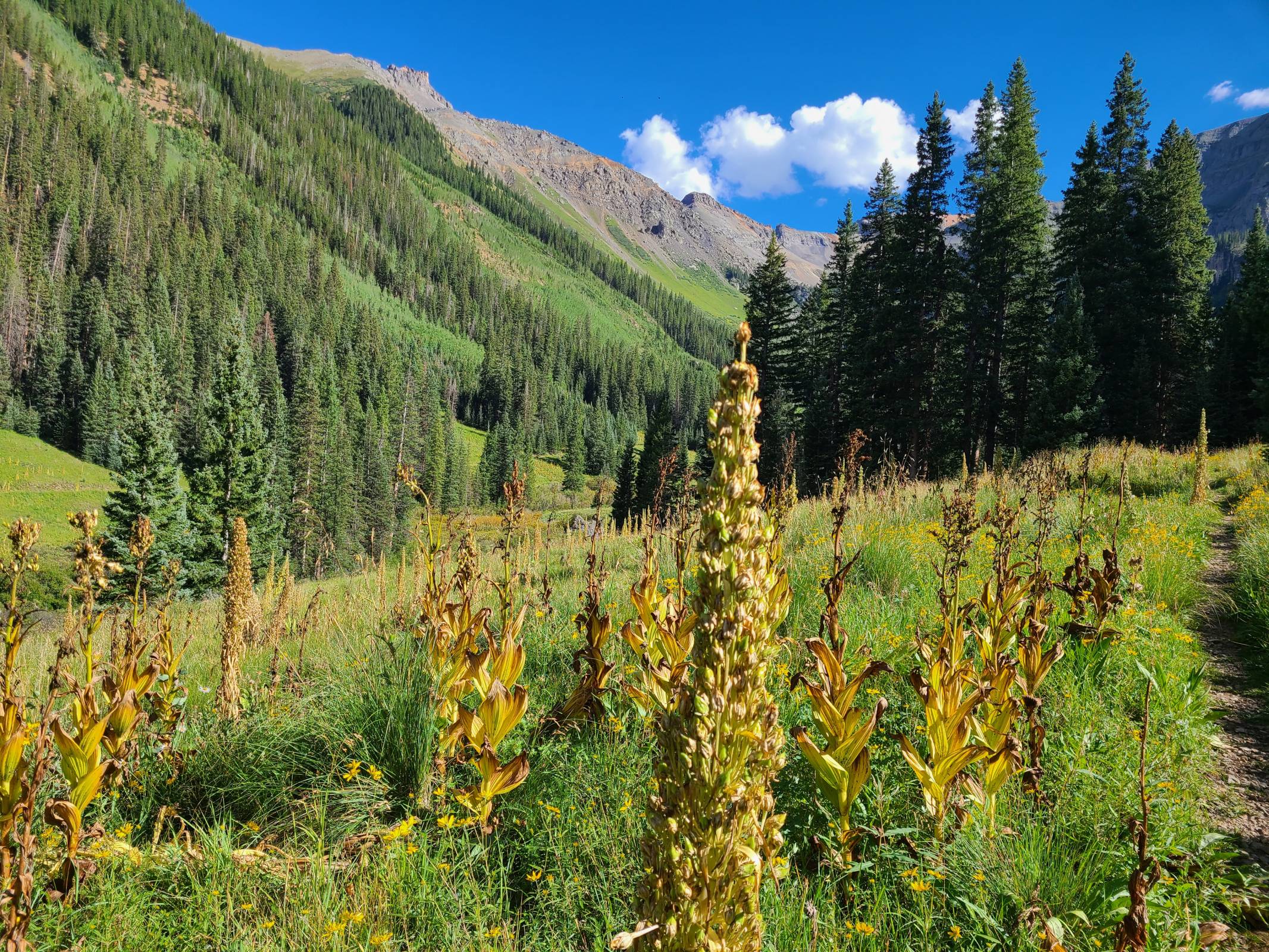
When I returned to Waterfall Canyon on August 17, the flowers were gone. The stalks were still easy to pick out across the meadow, but the plants had turned from green to yellow and brown and were well into seed. The same tall stalks remained standing, now showing the next stage of the plants’ life cycle.
Monument plants die after producing seed, so these plants will not flower again. For individuals that may have spent 30 or 40 years growing before putting up a stalk, this was their one flowering season.
There is no way to know when Waterfall Canyon will see another display like this. Inouye’s records near Crested Butte show large flowering years arriving irregularly, sometimes only a few years apart and sometimes much farther apart. The rainfall associated with a flowering year comes years before the stalks appear, so conditions in any one summer offer little clue about when the next large flowering will come.
Monument plant is one of several gentians found in the mountains around Telluride. While its towering stalks are hard to miss during a mass flowering, other members of the family are much smaller. Several blue and purple gentians flower later in the summer and can still be found after the monument plants have gone to seed.
Monument plants are among the many wildflowers photographed around Telluride and the San Juan Mountains. See more in Mountain Flowers of Telluride and the San Juan Mountains.